DO YOU NEED A SAWBENCH?
James Hamilton James Hamilton

DO YOU NEED A SAWBENCH?

Every woodworker knows they need a workbench. We’ve made plenty of workbench-related tutorials—you can find those on Youtube. But do you also need a saw bench, or two? I think so—and that’s what this article is about.

Read More
IS IT BETTER TO SAND, SCRAPE, OR PLANE WOOD?
James Hamilton James Hamilton

IS IT BETTER TO SAND, SCRAPE, OR PLANE WOOD?

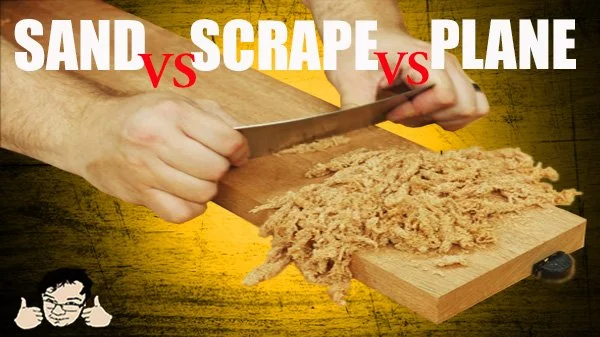
Sanding, scraping, and planing each have strengths and trade-offs when preparing wood: sanding is the most forgiving and convenient, scraping is slightly faster but physically demanding, and planing is fast and effortless—if the wood cooperates. Choosing the right method depends on your skill level, project needs, and how much you prioritize speed, effort, and control.
Read More
DO YOU NEED A WOOD MARKING GAUGE?
James Hamilton James Hamilton

DO YOU NEED A WOOD MARKING GAUGE?

A marking gauge is a timeless woodworking tool that provides precision and repeatability that pencils and rulers alone cannot. This article explores different types of gauges—pin, knife, and disc-style—explaining their uses, proper technique, and applications for joinery, layout, and surface marking.

Read More
WHY SHARP ISN’T ALWAYS BEST - DULL CHISELS
James Hamilton James Hamilton

WHY SHARP ISN’T ALWAYS BEST - DULL CHISELS

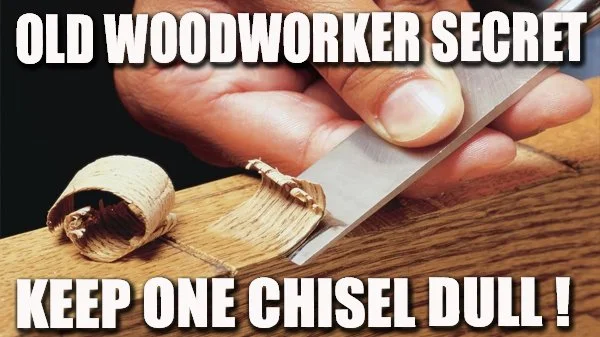
While sharp chisels are essential for most woodworking tasks, a deliberately blunt chisel can be a surprisingly useful tool for controlled paring and shaping, especially across the grain or on end grain. This article explains how to create a crisp blunt edge, when to use it, and the advantages it offers over ultra-sharp tools in specific scenarios.
Read More
IS JAPAN SLOWLY KILLING WESTERN-STYLE SAWS?
James Hamilton James Hamilton

IS JAPAN SLOWLY KILLING WESTERN-STYLE SAWS?

But there’s still a great deal of confusion about how these saws work, the differences between the types available, and whether a Japanese saw is right for you. Most videos and articles focus on the benefits of these tools while largely ignoring the downsides. In this article, I want to present a clear, concise guide to the pros and cons of the three most common types of Japanese saws, so you can make an informed decision about which to try—if any at all.

Read More
THE HISTORY OF WOOD SCREWS
James Hamilton James Hamilton

THE HISTORY OF WOOD SCREWS

For thousands of years, nails were the only metal fasteners used to attach things together. In a previous article, we discussed how nail technology evolved over time—and why old-fashioned cut nails may actually work better than modern wire nails. In this article, you will learn the fascinating history of screw technology—and why screws aren’t always the best choice.

Read More
ADDRESSING THE STROPPING MYTH
James Hamilton James Hamilton

ADDRESSING THE STROPPING MYTH

There is so much misinformation out there about stropping your woodworking tools, even I was confused for a long time. Does stropping make tools sharper? Is it necessary for woodworkers? Will soft leather round over the edge? Why not use MDF instead? What about charging strops with paste?

In this post, I’ll try to cut through the nonsense and answer those questions so you can get the edge you need with minimal expense and hassle.

Read More
WHY A LOT OF TOOL STEEL IS BAD
James Hamilton James Hamilton

WHY A LOT OF TOOL STEEL IS BAD

At some point, every woodworker is confronted with the argument that old tools—particularly chisels—are superior to new ones. It's not uncommon for some to pay more for an antique chisel than for a new, high-quality one. But is it true? Are these old tools, made in an era when quality was prioritized over cost, truly better than most modern chisels?

Read More
THE FORGOTTEN HISTORY BEHIND JAPANESE CHISELS
James Hamilton James Hamilton

THE FORGOTTEN HISTORY BEHIND JAPANESE CHISELS

While Japanese chisels as woodworking implements have existed for centuries, it was the makers of the famed samurai swords that may have given us the chisels OF today. In this post, I'll share that forgotten story and help decode the fascinating technology that makes Japanese woodworking chisels so different from modern Western-style chisels. By the end, you'll have a whole new respect for this strange little tool with the dented backside.

Read More
THE HISTORY OF SANDPAPER
James Hamilton James Hamilton

THE HISTORY OF SANDPAPER

Every time I talk about sandpaper, someone tries to shame me for not using hand planes and scrapers to smooth every surface like a “real” woodworker. They are under the false impression that sandpaper is a modern invention, which the great masters of the past would never have touched.

Read More
THE TRUTH ABOUT 2X4S: HOW BIG LUMBER IS RIPPING YOU OFF
James Hamilton James Hamilton

THE TRUTH ABOUT 2X4S: HOW BIG LUMBER IS RIPPING YOU OFF

Historically, 2x4s were closer to their nominal dimensions, but inconsistencies and industrialization led mills to adopt standardized sizes. Today, drying and planing reduce a board’s dimensions to roughly 1½" × 3½", a practice known as nominal sizing, which prioritizes uniformity and profit over true measurements.

Read More
THE GREAT SCREWDRIVER WARS
James Hamilton James Hamilton

THE GREAT SCREWDRIVER WARS

It’s been more than 200 years since Canada and the United States fought a war against each other, and if it ever happens again, it won’t be over important issues like who has the best pancakes or the best version of Chris Farley. It will be over something that has divided not just North America, but the entire world for over a century: Which screwdriver is best—the Canadian Robertson head, or the American Phillips head?

Read More
A FORGOTTEN TECHNOLOGY FROM THE OLD DAYS OF WOODWORKING!
James Hamilton James Hamilton

A FORGOTTEN TECHNOLOGY FROM THE OLD DAYS OF WOODWORKING!

Many people believe the absence of nails is a sign of good craftsmanship. And I can't say I blame them because they don't make nails like the used to. The modern nail isn’t designed for performance, it's designed for price. They are cheap to make. In this article I'll remind you of the little known, and I think very interesting features that make cut nails superior to wire nails, and perhaps a better choice for your next project.

Read More
AN ANCIENT WOOD FINISH FORMULA THAT CAN NOT BE MESSED UP!
James Hamilton James Hamilton

AN ANCIENT WOOD FINISH FORMULA THAT CAN NOT BE MESSED UP!

Wood finishing can be a very intimidating subject for a lot of woodworkers, and I am often asked if there is a simple, effective finish that can't be messed up, doesn't take a lot of time, doesn't cost as much as the wood itself, and which looks great to the eye and is pleasing to the touch.

Read More