
ADDRESSING THE STROPPING MYTH
Learn the truth about stropping woodworking tools—how leather, light abrasives, and proper technique can keep chisels and plane irons razor-sharp without expensive sharpening stones. This guide breaks down compounds, materials, and methods so you can sharpen faster, cheaper, and with better results.
There is so much misinformation out there about stropping your woodworking tools, even I was confused for a long time. Does stropping make tools sharper? Is it necessary for woodworkers? Will soft leather round over the edge? Why not use MDF instead? What about charging strops with paste?
In this post, I’ll try to cut through the nonsense and answer those questions so you can get the edge you need with minimal expense and hassle.
Does Stropping Make Tools Sharper?
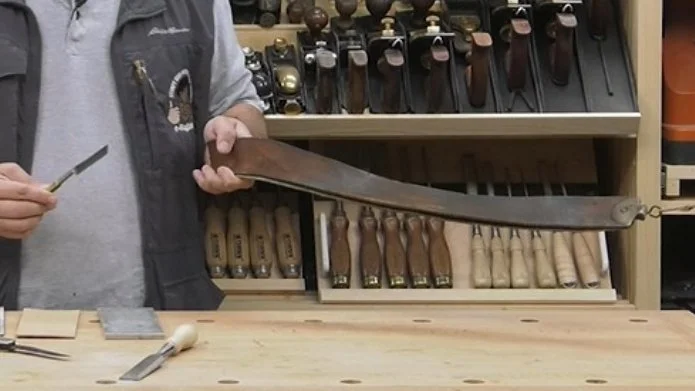
This was my great-grandfather's razor and strop. The strop used to hang from a post, and I remember how he'd pull the leather tight with one hand and stroke the razor back and forth across its surface. He'd do a few strokes on each side every time he shaved. What was he doing?
I hear many people say stropping was just intended to remove the wire edge left behind by a sharpening stone—that last remnant of steel that the stone pulled away from the edge and left loosely connected like a fine wire. But my great-grandfather only occasionally use his razor on a stone. I saw him use one on his pocket knife all the time, then he'd brush the edge against his palm to remove any wire edge.
The strop had a more complex purpose, and understanding that purpose is key to understanding how a strop can be a valuable tool for woodworkers.
A straight razor is a bit different from a woodworking tool. It has an edge so micro-thin that the whiskers on your face can bend and mash it until it becomes wavy. The outer surface can also form microscopically shallow scratches and even fine chips.
By stroking a razor's edge back and forth on a leather strop, you are:
Re-aligning the steel, bending it back into place so it will cut cleanly again.
Burnishing the edge, actually moving the surface of the steel around to fill in some of the microscopic nicks.
Abrasively polishing the steel—wearing away some of those fine chips and scratches, depending on the strop material.
Granted, the edge of a chisel is not nearly as thin as a straight razor, but a strop can still do the same three things. If we as woodworkers utilize these capabilities properly, we can get razor-sharp edges as quickly and cheaply as our ancestors did.
Why Leather?
I see some modern woodworkers saying you should just use plain old wood for stropping. The old-timers had wood. So why did they use leather instead?
Because good quality, vegetable-tanned leather is unique. It is much smoother than wood but also contains natural silicates, making it a very fine abrasive. Wood contains silica as well, but you only need to rub your hand on a piece of nice leather to feel the difference.
A piece of vegetable-tanned hide is what many people typically prefer for stropping tools. It’s often made from horsehide or cowhide. One side has a rough surface; the other is made smooth and shiny by repeated compression under smooth glass rollers.
Before an edge got dull, an old-timer would strop it on the shiny surface because it’s just hard enough to bend and re-align the edge, just abrasive enough to wear off a tiny bit of steel, but smooth enough to burnish and polish what’s left.
Of course, to make that effective, he had to keep his edge nearly razor-sharp at all times. Otherwise, he needed a more aggressive strop like linen—or he was back to the stones.
Today, instead of using a more aggressive strop, we can just flip it over and use the rougher surface, which is ideal for applying abrasive pastes that are more aggressive than the leather itself but still ultra-fine.
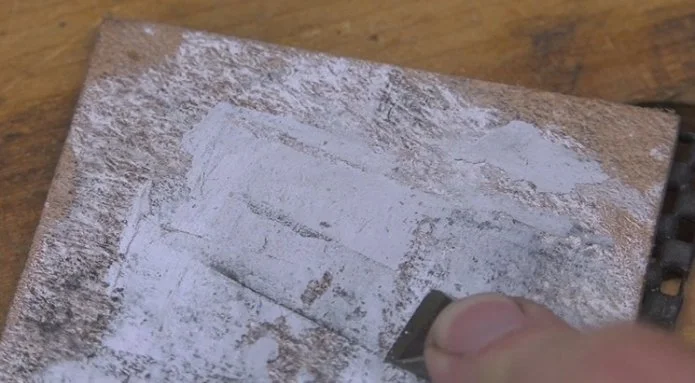
The rougher surface of leather coupled with abrasive pastes are great for mimicking a more aggressive strop.
We'll talk about pastes a bit more later. But that’s what makes leather uniquely useful as a stropping material. The rough side holds compound better than wood or MDF, and the smooth side is just the right surface for the finest honing.
Isn’t Leather Too Soft?
Some folks say it's better to use MDF than leather because the surface of MDF is hard, while leather is soft. And if you press a tool against a soft material, you compress it and actually curl a bit of it up against the edge you're trying to sharpen—effectively dulling it.
In theory, this can be true, especially if you use a soft leather that compresses easily. But let's go back to the barber’s strop. He may pull it tight, and there’s some technique involved to avoid rolling over the edge altogether, but even if he's careful, a leather belt is still going to deflect with each stroke—wrapping around the edge more than a stiff piece of leather on a flat surface will.
How can a barber get an edge sharp enough to shave your face if he's dulling it with every stroke?
Because there's a fine line between blunting an edge and dulling it. A sharp edge occurs where two planes meet. To be perfectly sharp, those two planes would have to keep going until the steel at the meeting point is just atoms thick. How long do you think an edge that thin would last? Not long.
On the other hand, if those planes meet at a slightly thicker point, the edge will be more durable. I'm not talking about rounding your edge right over. I’m just saying the slight deflection of the leather, combined with the light abrasiveness of the honing compound, is not enough to dull the tool more than it sharpens it.
That said, if you have a soft leather or really bear down on it, you could have problems. And that’s why some people use MDF instead. I've done my share of MDF honing too. I'm not saying that's wrong if it works for you—but I find that the rough side of the leather holds the compound better.
What Compound Should You Use?
There are quite a few options out there for adding abrasive compounds to your strops. There are diamond pastes, but those seem a little pricey for me, and as we'll discuss shortly, stropping is really a good way to save money, not spend more of it.
One thing I've used a lot of in the past is abrasive sticks. These are a mixture of minerals and wax, and many can be identified by color:
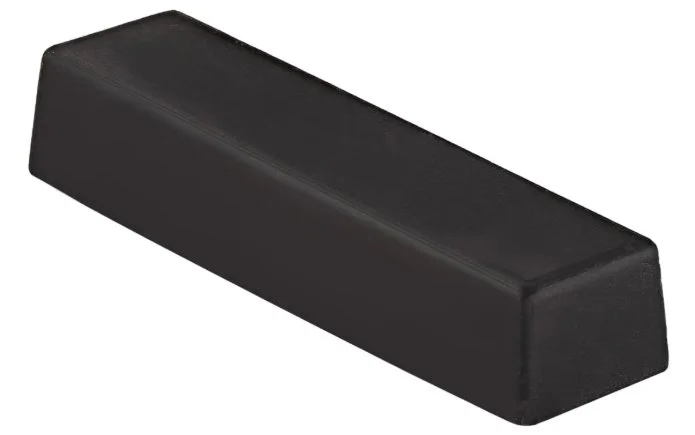
Black emery: One of the most aggressive (25–35 microns), similar to an 800 grit diamond stone.
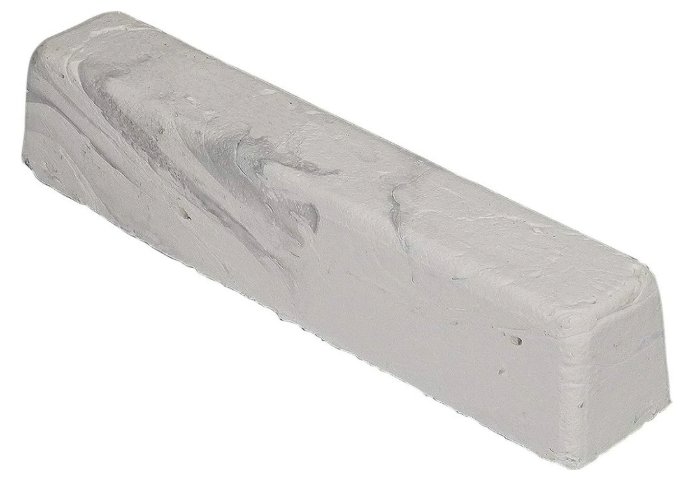
White rouge: Contains aluminum oxide (8–15 microns), comparable to 2000 grit.
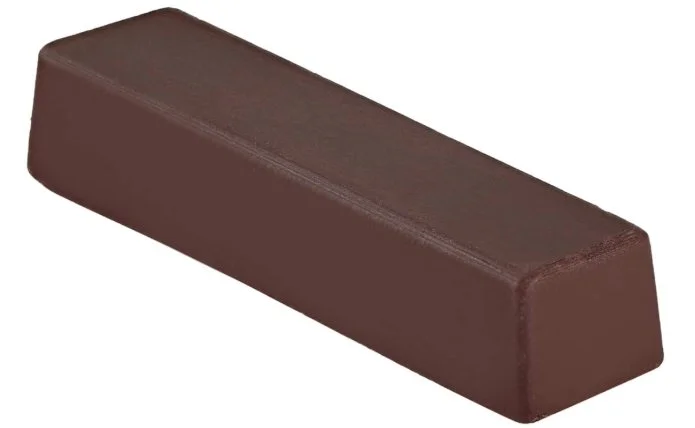
Brown tripoli: Around 4–8 microns, or 4000 grit.
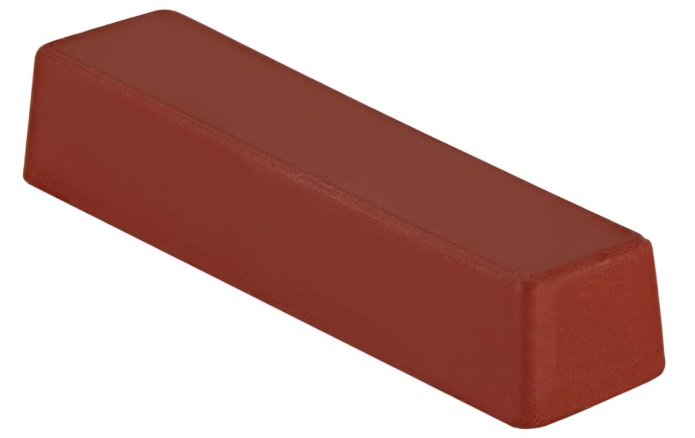
Red rouge: 2–4 microns, or 8000 grit.
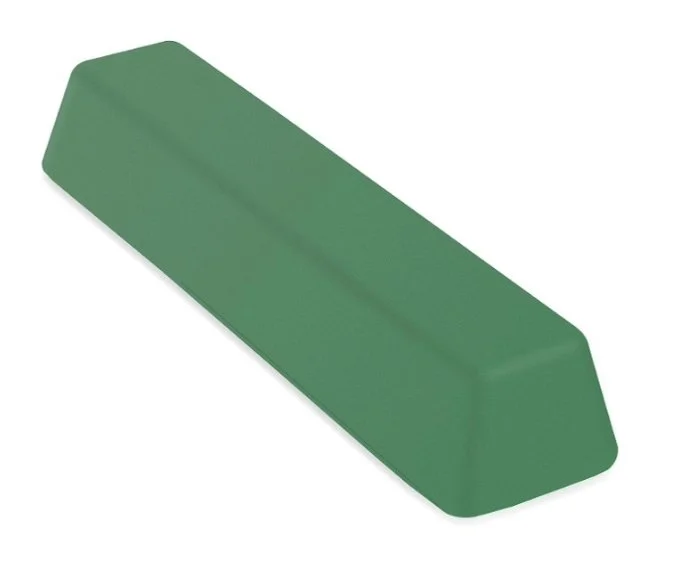
Green or gold compound: Often around 1 micron or smaller—comparable to 10,000 grit or finer.
I say “sometimes” because you never really know for sure. Manufacturers don’t always disclose the contents of their compounds. I can tell you this: if it cuts really fast, it probably contains some coarser particles.
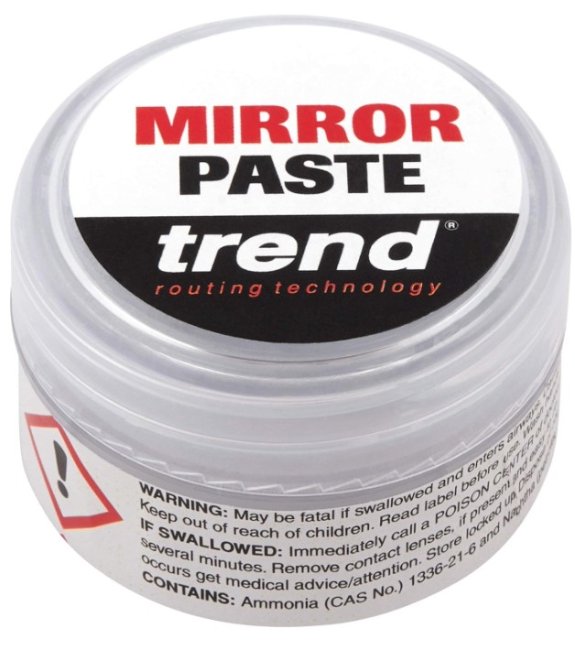
A good example is this mirror paste by Trend. They don’t say what’s in it or what the grit is. All I know is it removes steel really quickly—as you can see by how a single stroke darkens the paste with fine metal shavings—but still leaves an ultra-fine edge.
I’ve also heard of folks using auto body pastes and rubbing compounds. Which should you use?
You have to find a balance between something that’s fast enough and fine enough for your tastes. I wouldn’t go coarser than about 5000 grit. That would include red, green, gold, or even some of the pastes like the Trend stuff I use—unless you’re going to use multiple strops with progressively finer pastes.
Can Stropping Save You Time and Money?
We live in a world with a lot of sharpening options. You can buy ceramic water stones with grits into the tens of thousands. So why use a leather strop?
Because it will do the job with less hassle and less money. A 10,000 grit water stone will cost you over $100. You have to maintain it to keep it from dishing, they can make a mess, and eventually, they wear out.
A chunk of leather like this? A few bucks, depending on where you get it. The paste will cost a bit more but lasts for years. There’s no maintenance, no mess.
Here’s my hand sharpening process:
If I have a really beat-up edge, I grind a new bevel with a power tool, like a grinder.
Then I sharpen it on a 1000 grit diamond stone (which requires zero maintenance).
I go straight from that to the strop for final honing—sometimes using a coarse paste like brown tripoli, then switching to a finer paste, and finally a few strokes on the clean shiny side.
It’s just like working through the grits of sandpaper or water stones—except I only need to invest in a single stone. If you want to keep it really simple, use one stone, one strop with one paste on the rough side, and no paste on the shiny side.
After that, the key is keeping it honed. Return frequently to the strop and you'll have to use the stone less and the grinder hardly at all. That's fast, easy and cheap.
I'll put links below the for the leather I use if you need some, and the paste, and my favorite diamond stone if you want to check them out.
(The links below are affiliate links. If you make a purchase, I may receive a small commission.)
Trend Mirror Paste: https://amzn.to/42ZYvaP
Trend Stropping Leather: https://amzn.to/2n4BDmN
MPOWER Diamond Stones Sharpening Systems: https://amzn.to/3YG36NN
Need some cool tools for your shop? Browse my Amazon Store for inspiration.
