
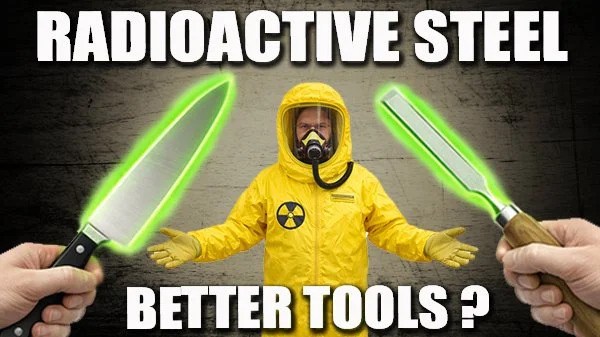
DID NUCLEAR TESTING RUIN MODERN TOOL STEEL?
Did nuclear testing really ruin modern woodworking tools? Despite a persistent internet myth, science and metallurgy show that modern tool steel is not only unaffected by atomic fallout—but is better than ever.
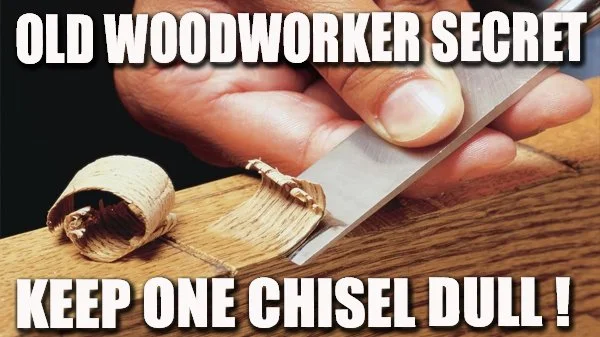
WHY SHARP ISN’T ALWAYS BEST - DULL CHISELS
While sharp chisels are essential for most woodworking tasks, a deliberately blunt chisel can be a surprisingly useful tool for controlled paring and shaping, especially across the grain or on end grain. This article explains how to create a crisp blunt edge, when to use it, and the advantages it offers over ultra-sharp tools in specific scenarios.

DO BEVEL ANGLES MATTER?
Do bevel angles on chisels and hand planes really matter? Learn how bevel angles affect cutting, why most woodworkers overthink them, and which simple angles work best for planes and chisels in real-world woodworking.
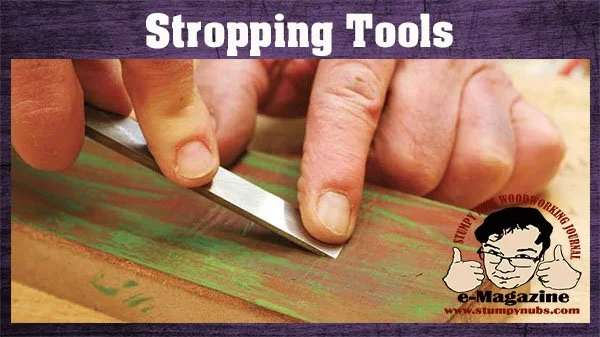
ADDRESSING THE STROPPING MYTH
Learn the truth about stropping woodworking tools—how leather, light abrasives, and proper technique can keep chisels and plane irons razor-sharp without expensive sharpening stones. This guide breaks down compounds, materials, and methods so you can sharpen faster, cheaper, and with better results.
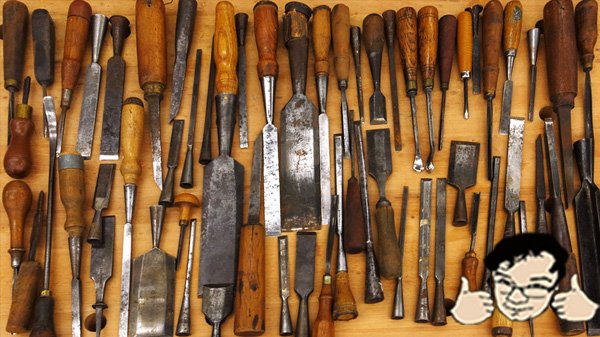
WHY A LOT OF TOOL STEEL IS BAD
Discover whether antique chisels truly outperform modern tools as we explore the evolution of western tool steel—from bloomeries and blister steel to crucible steel and today’s advanced alloys. Learn why modern chisels often deliver better performance, sharper edges, and greater reliability than vintage favorites.
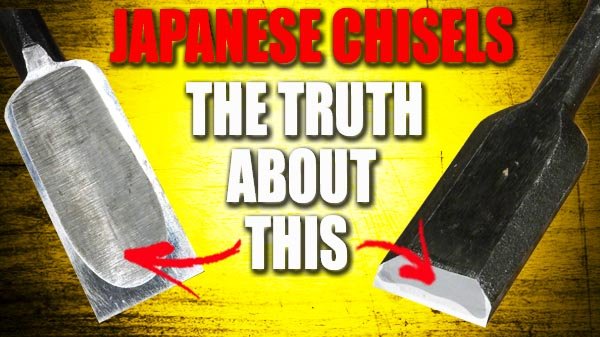
THE FORGOTTEN HISTORY BEHIND JAPANESE CHISELS
Discover the history, technology, and craftsmanship behind Japanese woodworking chisels—from samurai sword origins to laminated steel, hollow backs, and traditional handles. Learn what makes these tools unique and whether they deserve a place in your workshop.

THE TRUTH ABOUT HOLLOW GRINDS: DO THEY REALLY WEAKEN YOUR EDGE?
Discover the truth about hollow grinding and edge durability. Learn why grinding wheel sharpening doesn’t weaken your tools and how simple technique keeps edges strong.