
IS THIS DOWEL JOINT A GAME CHANGER?
Is the viral pinned dowel joint genius or gimmick? Learn the truth about its strength, looks, and whether it’s worth using beyond social media clickbait.
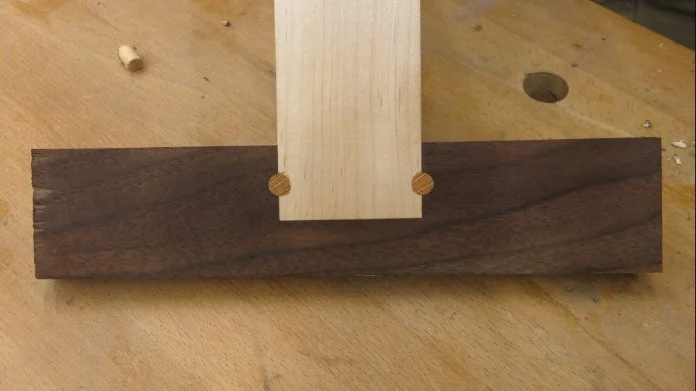
I’ve seen this joint pop up a few times on Instagram, TikTok — all the places where people post little clips to grab your attention and rack up clicks. You know, totally different from what happens on YouTube.
At first, I thought it was kind of cool. Then I thought, “Actually, that’s kind of dumb.” Then something else caught my attention, and I completely forgot about it until I saw it again and started the whole cycle over. It was a turbulent three or four minutes, I’ll tell you that.
So I figured I’d run it by you. Is this a legit joint, or just another clickbait scam? Before you rush to answer, let’s look at this analytically.
What’s the Idea Behind the Joint?
These videos usually present it as a quick and easy way to join two pieces of wood. Of course, the quickest and easiest method would be a simple butt joint — but that wouldn’t be very strong. The addition of dowels in this design is supposed to “lock” the joint together.
But does it really?
Not long ago, another YouTuber made a four-way variation of this joint — and let’s just say he wasn’t impressed with the results. The thing is, he only glued the dowels in their holes and left the rest of the joint dry. I suspect it would have performed better if he had glued all the surfaces.
How Strong Is It, Really?
This simpler two-way version actually seems to have a mechanical advantage over that overly ambitious four-way pinned joint. I suspect this one would be pretty tough to pull apart, even if only the dowels were glued.
But when you glue the entire joint, it becomes quite solid — at least in three directions: levering it up, down, or pulling it outward. That would make it a decent option for something like a face frame joint.
That said, how much of the strength actually comes from the dowels?
If I glued the same joint together without dowels, I think it would still be plenty strong in those same directions. I’m not convinced the dowels add much structurally — though they do look nice.
The Real Value Might Be Decorative
In truth, I think the dowels’ biggest strength is aesthetic. If you’re building a face frame for a built-in cabinet and use pinned joinery like this, you’ll impress non-woodworkers just like the millions of viewers who’ve “oooh’d” and “ahhh’d” over it online.
In that respect, it’s similar to Craftsman-era furniture, which often used unnecessary or purely decorative joinery as design features. And here we are, a hundred years later, still impressed by it.
Is It Really “Quick and Easy”?
Let’s not forget that this joint is often presented as a quick and easy option. But is it?
Not really. It actually took some fine-tuning at the table saw to get the fit just right. It would’ve been easy to overshoot and end up with ugly gaps.
I also had the benefit of a flat-tooth grind blade that left three smooth surfaces on my cuts. Without that specialty blade, I’d have been cleaning up with a chisel.
So… Legit Joinery or Clickbait?
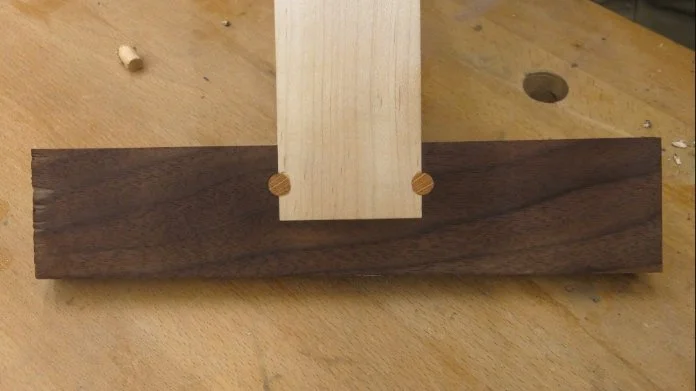
So what’s your take?
Is this joint actually useful? Would you ever incorporate it into a real project? Or is it mostly good for drawing clicks and views online?
Either way, I have to admit — it got people talking about woodworking, and that’s never a bad thing.
This post may contain affiliate links. If you make a purchase, we may receive a small commission.
Need some cool tools for your shop? Browse my Amazon Storefront for inspiration.
