
TRACE COATING - A WOOD FINISHING STEP YOU SHOULD DO!
Trace-coating is a simple trick that exposes glue spots, sanding swirls, and hidden flaws before your finish makes them permanent. By applying a thin, temporary coat of stain or colored water and sanding it back, you can fix problems early and end up with a cleaner, more professional-looking finish.
Have you ever put a finish on a project and been horrified when it suddenly revealed glue spots or sanding swirls?
I used to try to avoid this by wiping my projects down with mineral spirits or denatured alcohol. That makes the wood look much like it will once the finish is applied—flaws and all—so you can spot problems and sand them out before committing to the finish. The problem is that the effect is only temporary. Once the solvent dries, the flaws can be hard to see again.
The Trace-Coating Solution
Some time ago, I started trace-coating my projects instead.
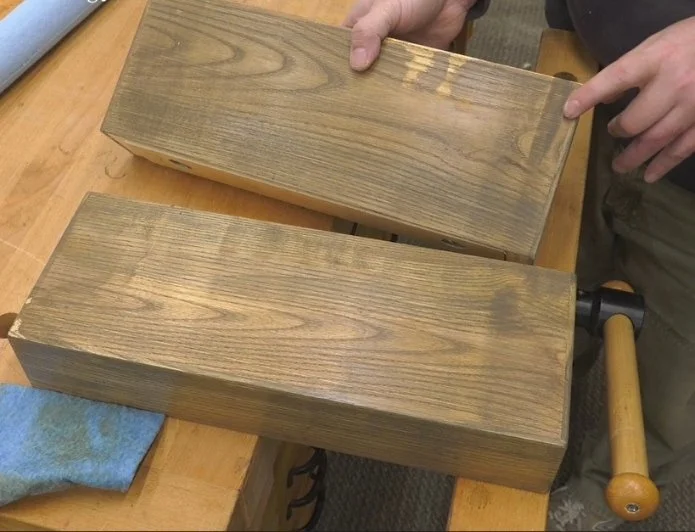
The idea is simple: apply a very thin coat of stain, dye, or even water mixed with a little food coloring. The exact color doesn’t really matter, although darker colors tend to reveal flaws more clearly. Just don’t apply it too heavily—you don’t want it soaking deeply into the wood.
If you’re using water and food coloring, it can even help to lightly dampen the surface first. That way, when you apply the colored water, it won’t absorb too deeply. This is especially useful on open-grain or figured woods that tend to soak up a lot of color.
Sand It Back and Let the Flaws Reveal Themselves
Let the trace coat dry for an hour or so, then sand it off.
Every flaw—the machine marks, glue spots, missed tear-out—will stand out like a sore thumb. You simply keep sanding until all the color is gone, taking the flaws with it.
This technique has saved my bacon many times, but it isn’t perfect for every situation.
When to Be Careful
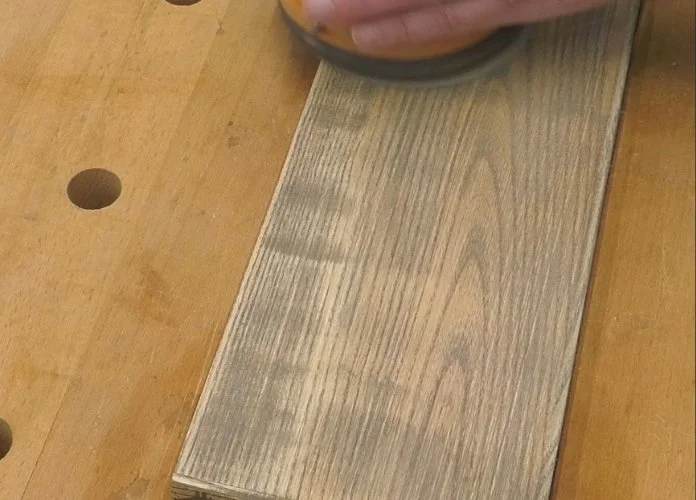
In the example above I was working with ash, which has an open grain similar to oak or hickory. Open-grain woods can absorb stain or dye deeper into the surface, making it harder to remove completely.
In this case, I planned to stain the project anyway, so it wasn’t a concern. But if you’re planning to apply only a clear film finish, you should use a light-colored stain or dye for your trace coat. It won’t highlight machine marks quite as dramatically, but it will be much easier to remove later.
Watch Out for Sanding Swirls
Trace-coating will also reveal those little “pigtail” swirls left behind by orbital sanders. Just be careful—if you use an orbital sander to remove the trace coat, you might create new swirls in the process.
Good sanding technique matters here. That includes hand-sanding at your final grit and carefully inspecting the surface before applying any finish.
Final Thoughts
Trace-coating is a tried-and-true technique used by some of the finest woodworkers I’ve ever known. It takes a little extra time, but it can make the difference between a finish that disappoints and one that looks flawless.
Give it a try—you might never skip it again.
This post may contain affiliate links. If you make a purchase, we may receive a small commission.
Need some cool tools for your shop? Browse my Amazon Storefront for inspiration.
