
A SIMPLE TRICK FOR MAKING ARCS EASIER
Stop wrestling with floppy strips when tracing curves! Bow arcs—simple hardwood strips with a string—hold their shape for both symmetrical and asymmetrical arcs, freeing your hands and making clean, repeatable curves a breeze.
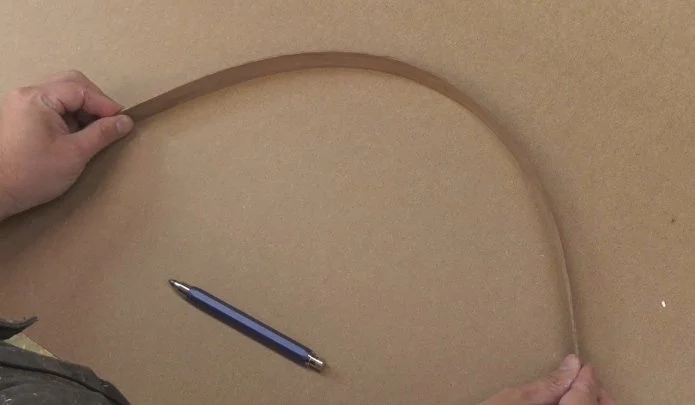
Most woodworkers are familiar with the trick of bending a thin strip of wood—around 1/8" thick or a little less—to create an arc. You simply bend the strip, hold it in place, and trace the curve onto your workpiece.
It works, but there’s a problem: you need two hands to hold the strip, which doesn’t leave you with a free hand to trace the arc. You can try to rig up clamps, but it often turns into a hassle. That’s why I made a simple solution: bow arcs.
The Symmetrical Bow Arc
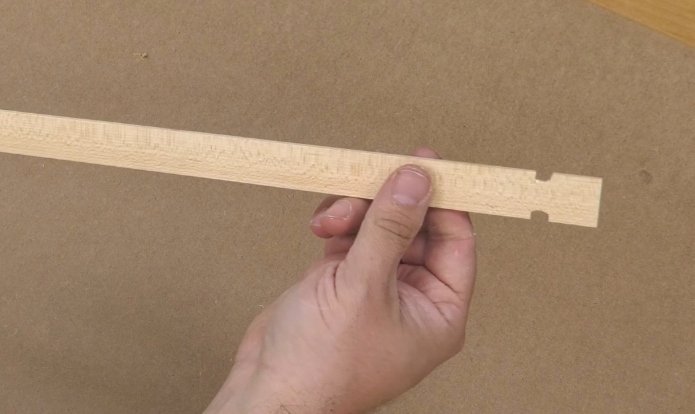
I made my bow arcs out of hard maple strips with small notches carved into each end. Then I attached a string to one end.
Here’s how it works:
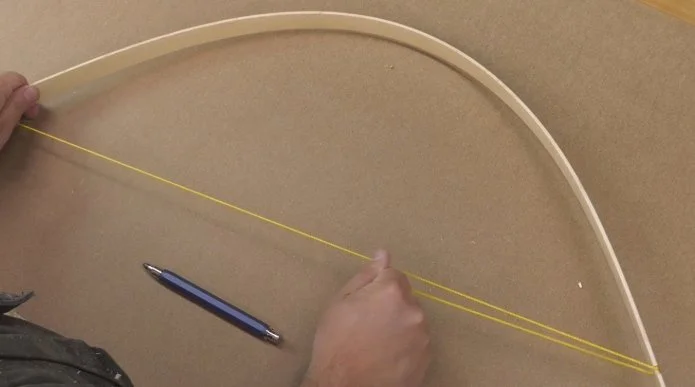
Place the string into the notch on the opposite end. Wrap it halfway around, then bend the strip while pulling the string tight. Adjust until you get the arc you want.
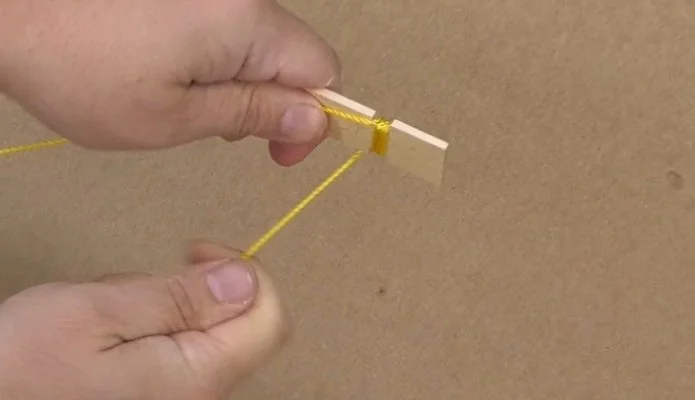
Wrap the string a couple more times and tie it off temporarily.
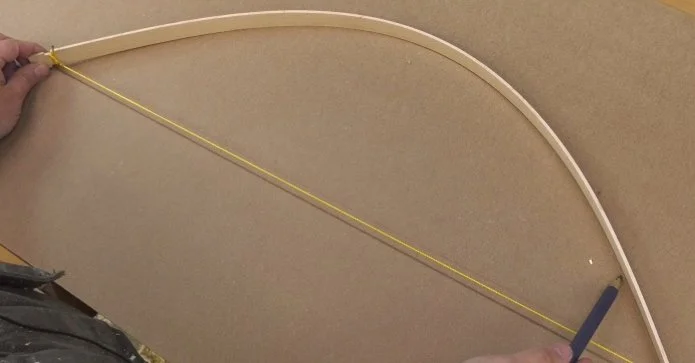
Now, the bow arc will hold its shape on its own. That frees up one hand so you can simply lay it on your workpiece and trace the curve.
The Asymmetrical Bow Arc
Sometimes you want a curve that’s not perfectly even—something more subtle and asymmetrical. For that, I made a second bow arc with a taper.
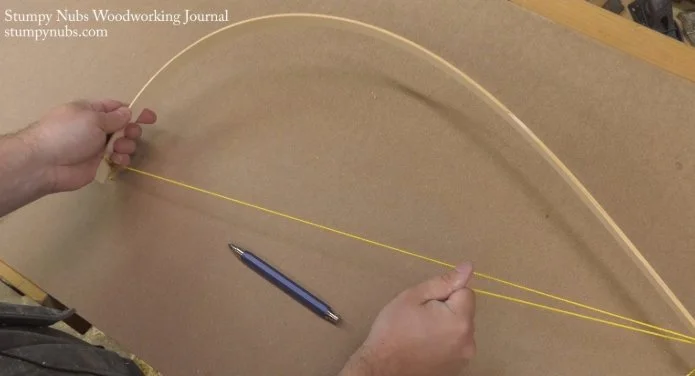
This one starts at about 3/16" thick on one end and gradually tapers down to about 1/16" on the other. I cut the taper using a table saw taper jig.
The setup is the same: notch, string, wrap, and pull. But because the strip is thicker on one end and thinner on the other, it bends more on one side than the other, giving you an asymmetrical arc. Once tied off, it’s ready for tracing.
Simple, Effective, and Worth Making
Both versions are simple to make. All you need is a straight-grained hardwood strip like maple, a few notches, and a piece of string. With these bow arcs in your shop, laying out clean, repeatable arcs is easier and faster than wrestling with a floppy strip of wood and two hands.
Happy woodworking!
This post may contain affiliate links. If you make a purchase, we may receive a small commission.
Need some cool tools for your shop? Browse my Amazon Storefront for inspiration.
