
HOW PROS MAKE PINE LOOK GOOD WITH STAIN AND DYE
Learn how to prevent blotchy stains on pine and achieve a smooth, professional-looking finish. Discover expert tips using pre-stain conditioners, gel stains, and colored wax for flawless results.
Many years ago, when I was still new to this craft, I bought a can of walnut wood stain with the idea that I could make some inexpensive pine look like fancy hardwood. The result? A blotchy project covered in what looked like tiger stripes—and a hard lesson about finishing pine.
Today, I’m here to save you from the same heartache. Not by telling you to stop using pine, but by explaining how you can use its unique characteristics to your advantage—and achieve a better-looking stained finish, quickly and easily.
Why Pine Stains Poorly
First, it’s important to understand why pine behaves the way it does.
“Pine” is a general term we often apply to any softwood from coniferous trees—trees that bear seeds in cones. Like all trees, conifers grow one layer per year, forming growth rings you can count to determine age. But here’s the key difference: while hardwood trees form rings from bundles of hollow, straw-like fibers, conifers use solid cylindrical fibers called tracheids.
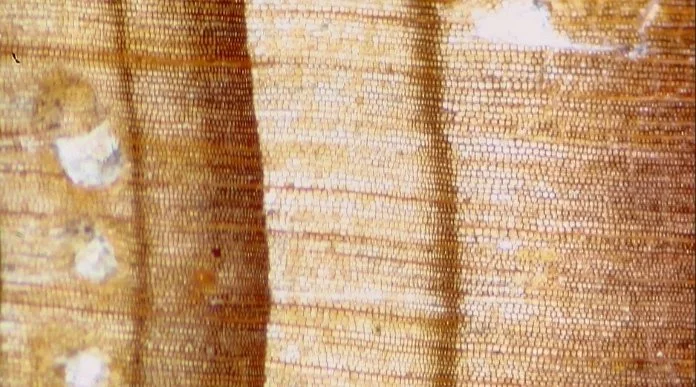
The solid cylindrical fibers produced by conifers called tracheids.
In early spring, these tracheids grow large and loosely packed—this is called earlywood. Later in the year, the tracheids grow smaller and denser—this is latewood. So, each ring in a coniferous tree includes both light-colored earlywood and dark-colored latewood. The ratio of each varies by species and even individual tree.
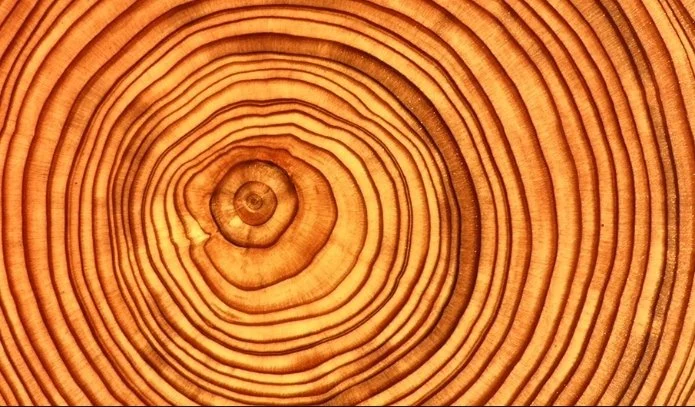
Here’s the problem: latewood is denser than earlywood, so it absorbs less liquid. When you apply stain to pine, the earlywood soaks up more color while the latewood resists it. The result? A harsh, uneven look commonly called grain reversal—where the previously lighter earlywood becomes darker than the surrounding latewood.
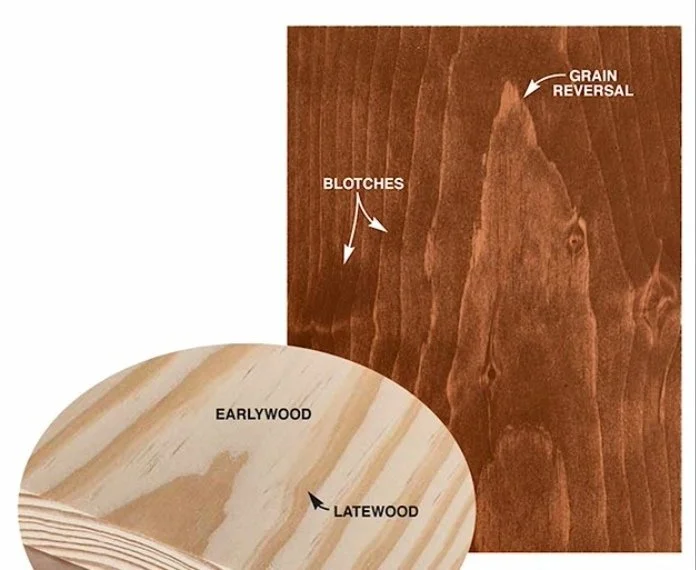
How to Prevent Blotchy Stain on Pine
Now that we understand the cause, we can work toward a solution. The goal is to prevent the earlywood from absorbing too much stain so that it blends more evenly with the latewood. How?
1. Use a Pre-Stain Conditioner or Sealer
Pre-treating the surface is one of the most effective ways to minimize blotchiness. You can use off-the-shelf pre-stain conditioners or sanding sealers. Some folks use a thinned shellac, while others even mix wood glue with water to make a DIY sealer.
These sealers work by soaking into the wood and clogging the fibers—especially in the more absorbent earlywood. That way, when you apply stain on top, it doesn’t soak in as aggressively, and you get a more even finish.
Tip: Always test on scrap wood. Every piece of pine is different. Some may need one coat of conditioner, others may need more. Test different methods on scrap from your actual project material.
2. Try a Gel Stain
Gel stains are thicker than traditional stains and tend to sit on the surface of the wood rather than soaking in. This helps avoid blotchiness since you’re not relying on absorption.
The downside? Surface stains are more prone to smearing or lifting when you apply a topcoat—especially oil-based finishes like polyurethane, which contain solvents that can soften even dry gel stain.
If you go this route, I recommend spraying your topcoat or carefully brushing it on without overworking the surface.
3. Use a Colored Paste Wax
Another method I use is colored paste wax. Like gel stain, wax sits on the surface. But there’s no need for a separate topcoat. It’s perfect when you want a soft, aged appearance but don’t need a tough, protective finish.
An added bonus: paste wax is easy to repair. Each new coat blends into the old one, making it a beginner-friendly option. (I’ve made a couple of videos on applying colored wax if you’d like to look those up.)
Final Thoughts
Just because pine isn’t walnut or mahogany doesn’t mean it’s not worth celebrating. Plenty of beautiful furniture has been made from uncolored pine. If you don’t love the look of stain on it, there’s no shame in going natural.
Consider a clear finish, untinted wax, or even a soap finish, and let the wood age into its own mellow beauty over time.
Sometimes, the simplest finish is the best one.
This post may contain affiliate links. If you make a purchase, we may receive a small commission.
Need some cool tools for your shop? Browse my Amazon Storefront for inspiration.
