
THE OIL FINISHES SCAM
Discover the truth behind tung and Danish oils—most are overpriced blends. Learn how to make your own pro-grade wood finish and save big.
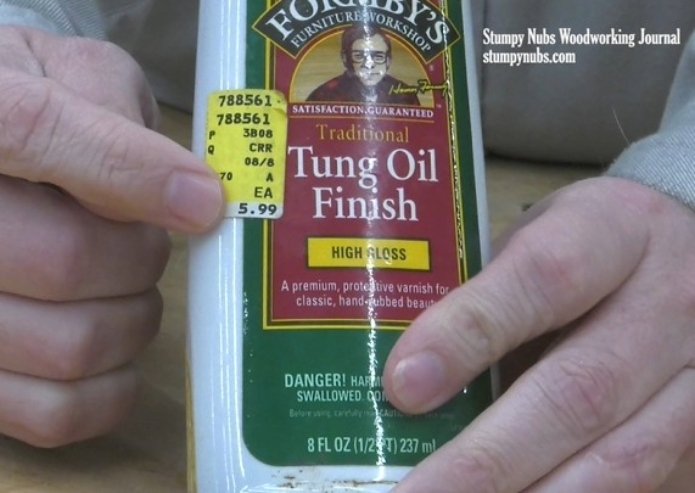
Believe it or not, this little bottle contains perhaps the most expensive wood finish in my shop. Don’t be fooled by the price tag. It may have been $5.99 when I bought it 15 years ago, but now the price is astronomical in comparison. Those must be some expensive tongues.
The truth is, they just don’t make it anymore—and the little bit that remains is being sold at inflated prices. I don’t know if people are actually paying that; I hope not. Because this stuff is not what most people think it is. In fact, many natural oil finishes that are favored by millions of woodworkers are little more than ordinary ingredients made to seem extraordinary through slick marketing.
Today, I’m going to expose the oily underbelly of the wood finishing world. I’ll cut through the hype and give you the knowledge you need to choose the perfect oil finish—without spending a ton on marketing fluff.
What’s Really in the Can?

Here I have four examples of the types of wood finishes millions of woodworkers use. It’s my opinion that every one of these cans is labeled in a way that can make you think you’re buying something more than what you’re actually getting.
Not that they’re straight-up lying. No, they choose their wording carefully, and they add some fine print on the back of the can. But most people don’t understand what those carefully worded labels actually mean.
Let’s take Formby’s, for example.

My grandfather swore by this stuff—and so did generations of other woodworkers. I can’t count how many times I heard someone say, “If you want a good finish, forget the polyurethane—get some of that tung oil!”
But this is not tung oil. I mean, there may be some tung oil in it, but I’ll bet it’s not much.
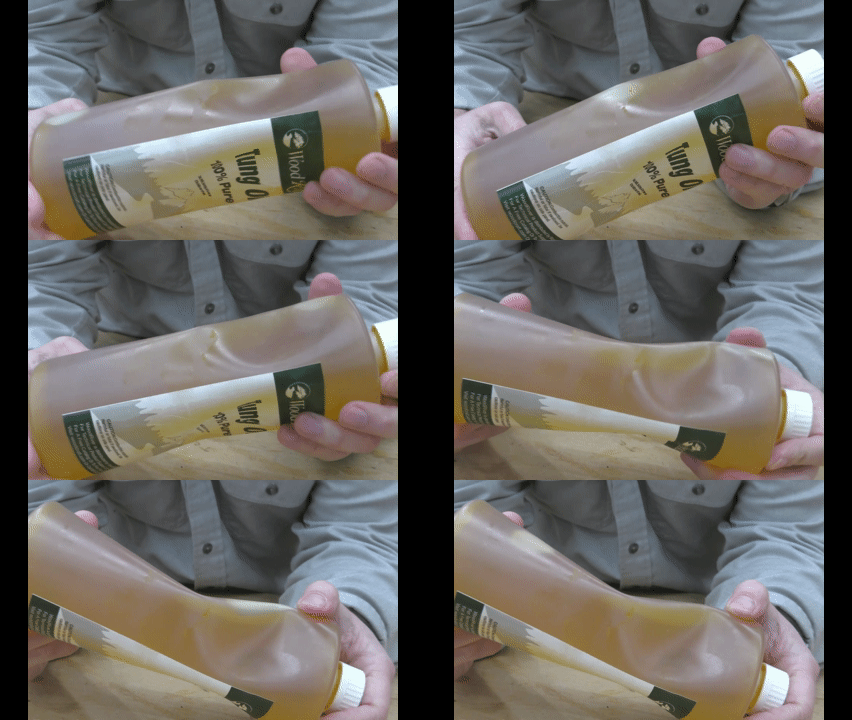
This is tung oil. It’s thick like syrup, while Formby’s is thin like water. That’s your first clue that you may not be getting what you think. Usually, the thinner an oil-based finish is, the more it’s been diluted by solvents like mineral spirits. That may help it soak into the wood more quickly, but most of it just evaporates into the air.
The second clue is in the fine print: “A high-quality varnish made from a blend of tung oil and other penetrating oils.”
It’s interesting that they only name one of the oils in their blend. Why do you think that is? I’ll bet it’s because the rest is just run-of-the-mill boiled linseed oil, and that doesn’t have the same exotic ring to it as “Tung Oil.”
You know what also doesn’t have an exotic ring to it? Polyurethane. But guess what’s in this stuff. I mean, the can doesn’t say it’s poly, but it’s definitely a wiping varnish.
That’s right—my grandfather, who turned up his nose at polyurethane in favor of tung oil, never knew he was probably just using polyurethane mixed with a little oil and a lot of cheap solvent, slickly marketed by highlighting the least significant ingredient.
Sure, they cover their butts by calling it a “Tung Oil Finish,” but it’s just a fancy wiping varnish.
If that’s what you want, stick around—because in a couple of minutes, I’ll tell you how to make all of this stuff yourself for significantly cheaper
Danish Oil and Teak Oil: Fancy Names for Basic Blends
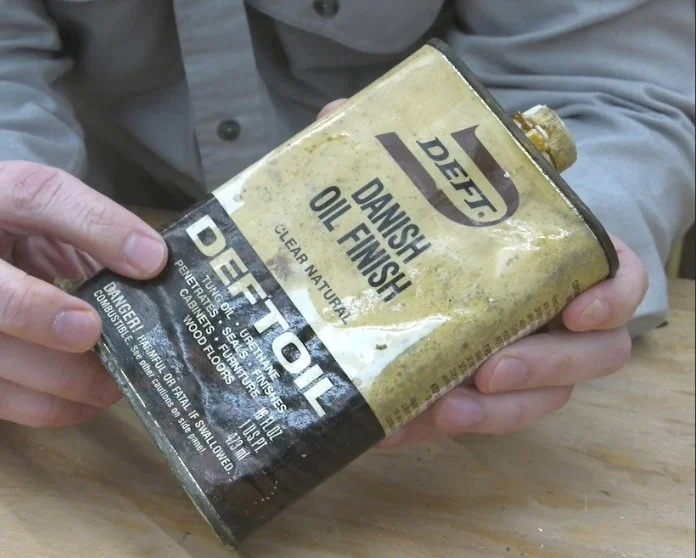
Let’s talk about Danish Oil, or its closely related cousin, Teak Oil.
Again, there’s a clue right on the front of the can: “Danish Oil Finish.” In fact, pure Danish oil doesn’t exist. It’s a marketing term wholly made up by the finishing industry to make you think there’s something special in the can.
So, what’s really in the can? Polyurethane, maybe a little natural oil, and a lot of cheap solvent. Sometimes the can will admit that if you look closely. Other times, it’s not so obvious. But if it says “finish” right in the name, you can bet it’s a blend of lesser ingredients than the name may imply.
Another “Tung Oil” That Isn’t
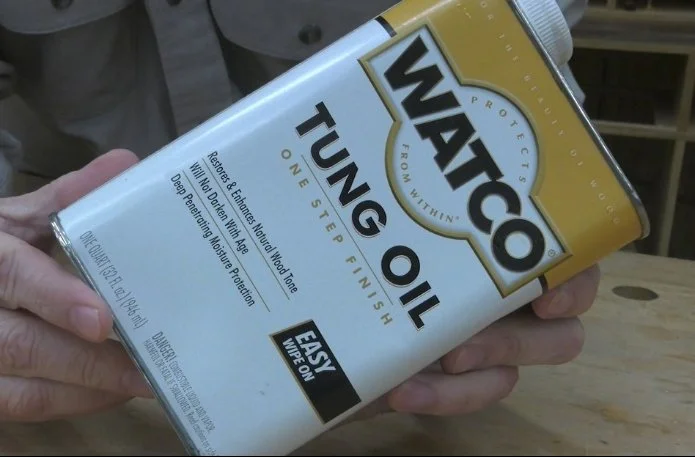
Here’s another one. This even says “Tung Oil” in big, bold letters. So that’s what this is—a big can of tung oil, right?
Not so fast. They aren’t calling it a “Tung Oil Finish” like the other blends, but they do throw in the “one-step finish” qualifier.
I could tell as soon as I picked up the can that it is too watery to be pure tung oil. There’s a fair amount of solvent in in. That’s probably what they mean by “one-step finish.” Because some folks like to dilute their pure tung oil to help it penetrate more deeply into the wood. Evidently, these folks are just trying to save us that step. You’re welcome.
Except... a quart of this costs about the same as a quart of pure tung oil. And how much tung oil is actually in the can? It doesn’t say on the label, but if you do some digging, it looks like there’s as little as 10%. The rest is inexpensive solvents—and who knows what else—because the numbers don’t add up to 100.
I’m not saying diluting your tung oil for you is a bad thing. I’m just saying you should know what you’re paying for.
Wipe-On Poly: Half the Product for More Money
Wipe-on poly is a similar scam, in my opinion. Maybe “scam” is too harsh—they’re not lying to you. They’re just charging you more money for half the finish.
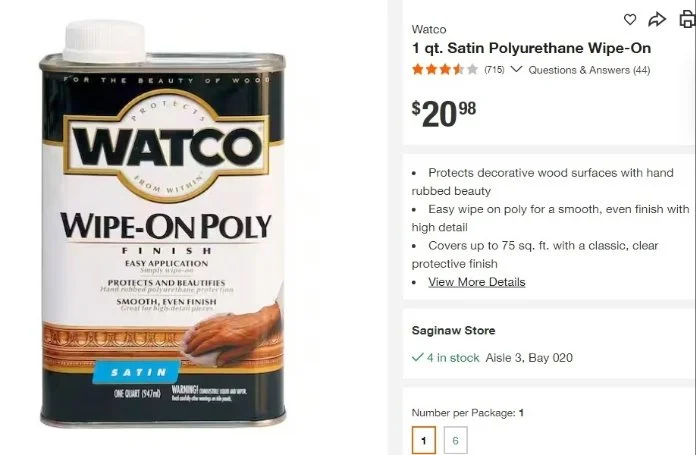
Here’s a quart of wipe-on poly. It costs $21 and covers up to 75 square feet.
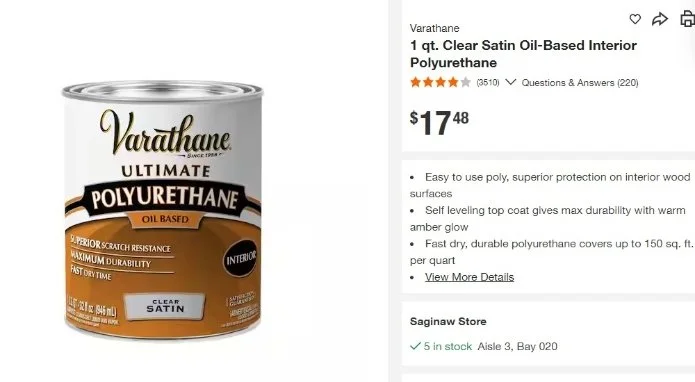
Here’s a quart of regular polyurethane. It costs $18 and covers 150 square feet.
Twice the coverage, for less money.
Now, both these cans contain solvents as thinners. But based on the coverage claims, the wipe-on poly is most likely equivalent to half a can of regular poly, with the rest being inexpensive solvent. How inexpensive is solvent?
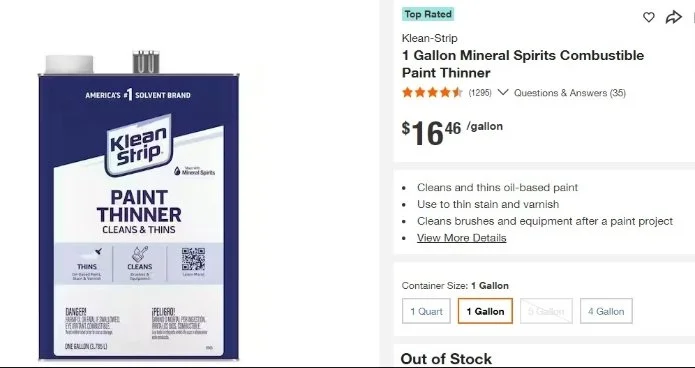
Here’s a gallon of mineral spirits for $16.46. That’s about $4 a quart—way cheaper than the poly they’ve thinned out for you.
How to Save Money and Make Your Own
Now I’m going to save you some money.
Want wiping poly?
Buy regular polyurethane. Dump half of it into another container, add an equal amount of a solvent, such as mineral spirits, and boom—you’ve got your own wipe-on poly for half the price per quart.Want penetrating tung oil?
Buy a quart of pure tung oil (look for the word “pure” on the label), mix it 50/50 with solvent—or more if you prefer—and it’ll cost you a fraction of the price.Want a Danish oil or tung oil finish with some added protection?
Mix equal parts pure oil, oil based polyurethane, and solvent together.
Then you can tweak that mix:
Want more protection? Use more poly, less oil.
Want it to wipe on easier and dry faster? Add more solvent.
Want to brush it on and build it up quicker with fewer coats? Use less solvent.
You don’t need these brands to do you any expensive favors—unless you just like paying more money for the added convenience of having it ready to go off the shelf.
Let your wallet breathe, and take control of your finish. Once you know what’s in the can, you’ll never look at a “tung oil finish” the same way again.
Happy woodworking!
This post may contain affiliate links. If you make a purchase, we may receive a small commission.
Need some cool tools for your shop? Browse my Amazon Storefront for inspiration.
