
HOW TO CUT ACUTE BEVELS ON THE TABLE SAW
Learn how to cut acute bevel angles, such as 30 degrees, on a table saw using simple math and a safe support technique—no specialty jigs required.
Cutting bevels between 45 and 90 degrees on a table saw is easy enough. But what if you need a more acute angle, like 30 degrees?
Most table saws won’t tilt the blade that far—but with a little math and a simple trick, you can still make the cut accurately and safely.
The Simple Math Trick
Here’s the key idea:
A table saw blade can usually tilt up to 45 degrees
Your workpiece edge is naturally 90 degrees
To get a 30-degree bevel, subtract the angle you want from 90:
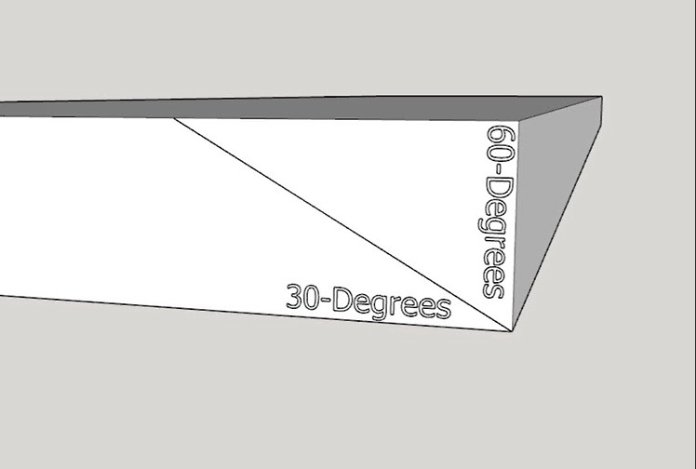
90° − 30° = 60°
Now:
Tilt your blade to 60 degrees
Stand your workpiece on edge (which is 90 degrees)
The combined geometry results in a 30-degree bevel on the edge of the workpiece.
Why You Can’t Cut It This Way Directly
While the math works perfectly, there’s a serious problem if you try to cut the bevel directly this way.
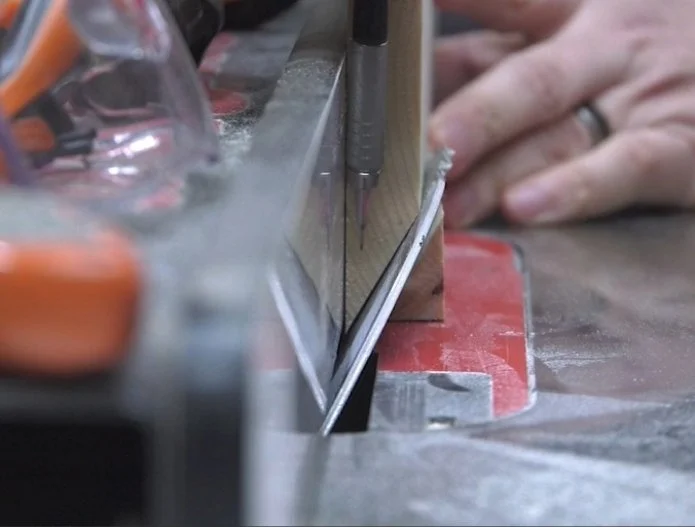
As the cut progresses, you’ll eventually realize that:
You’re removing the entire edge of the workpiece
Halfway through the cut, the only thing supporting the panel is the spinning saw blade beneath it
That’s obviously unsafe and unstable.
The Safe Solution: Add a Support Panel
To safely cut the bevel, you need to give the workpiece continuous support throughout the cut.
Here’s how:
Use double-sided tape to attach a second piece of material to the back side of your workpiece
Make sure the two pieces are aligned and firmly bonded
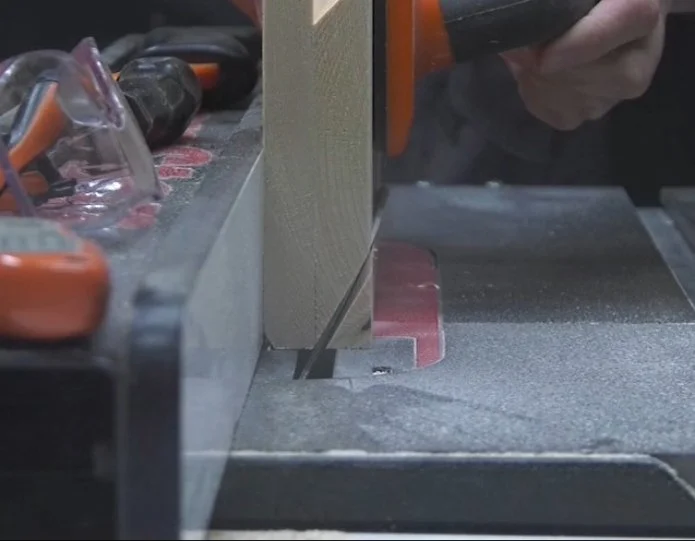
Now when you make the cut:
The outer panel gets the bevel
The inner panel rides on top of the saw table
The inner panel provides full support from start to finish
This keeps the workpiece stable and eliminates the dangerous moment when the blade would otherwise be the only thing holding it up.
Final Thoughts
With a little geometry and a simple support trick, you can cut acute bevels—like 30 degrees—on a table saw that would normally seem impossible.
Just remember:
Use math to your advantage
Never sacrifice support during a cut
Add a backing piece anytime the workpiece might lose stability
Smart setups make difficult cuts both accurate and safe.
This post may contain affiliate links. If you make a purchase, we may receive a small commission.
Need some cool tools for your shop? Browse my Amazon Storefront for inspiration.
