
MAKE YOUR OWN WIPE-ON POLYURETHANE
Store-bought wipe-on polyurethane is just regular poly thinned with mineral spirits—so why pay extra? This guide shows you how to mix your own, apply it for a smooth, durable finish, and save money while getting pro-level results.
A lot of new woodworkers buy wipe-on polyurethane because it promises to be easy to apply. And that’s true—it is easy to apply. But more experienced woodworkers rarely buy the pre-made stuff. Not because they don’t like wipe-on poly, but because they don’t see the point of paying extra for what is essentially regular polyurethane diluted with inexpensive mineral spirits. You can make it yourself for a lot less money.
First, I’ll tell you how to make it. Then I’ll explain why you might want to make it, and how you might use it.
How to Make Your Own Wipe-On Poly
Begin with a can of regular polyurethane. Make sure it’s an oil-based poly. The label on the can will tell you whether it's oil- or water-based. You can also tell by the color: oil-based polyurethane has a translucent amber tint, while water-based poly is white and more opaque, like milk.
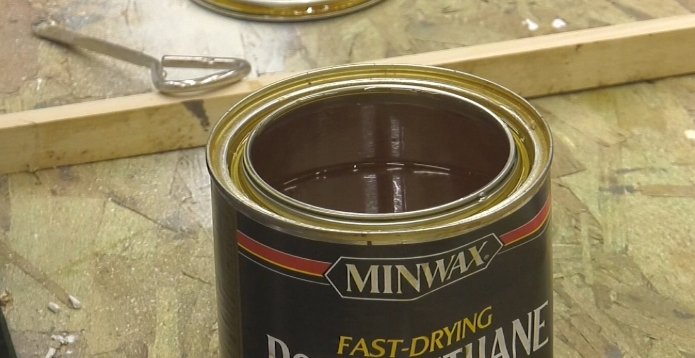
Oil-based polyurethane has a translucent amber tint.
You can thin water-based polyurethane and wipe it on, but you won’t get the same results as with an oil-based finish. One of the main selling points of water-based poly is how fast it dries. But a thinned oil-based wiping poly will also dry quickly. So, unless you absolutely can’t tolerate the fumes, I don’t see the point in using a water-based wiping poly.
When you open the can, stir it well—especially if you're using a satin finish, which contains flatteners that must be evenly distributed.
Then immediately pour some into a container and add an equal amount of mineral spirits. It’s that simple. You're looking for about a 50/50 mix. You don’t have to measure it exactly—just eyeball it. The result should be thin enough to wipe on with a cloth or foam brush, but not so thin that it runs easily.
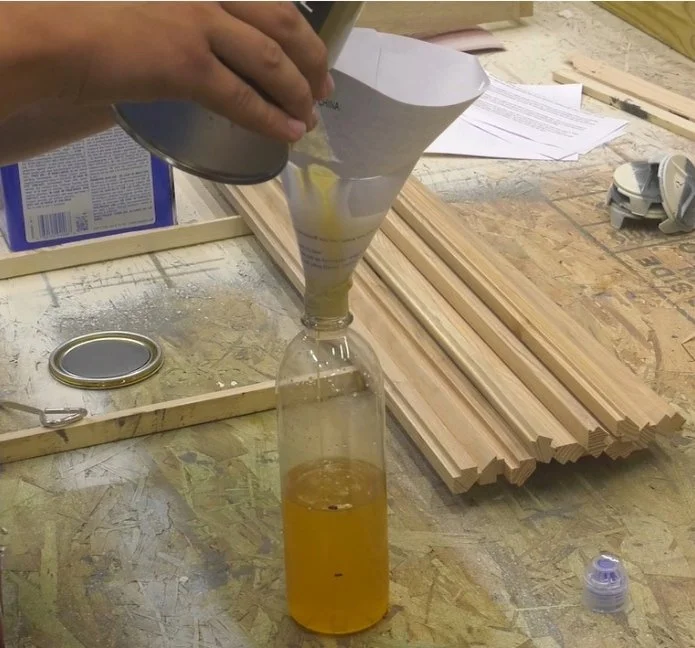
My preferred method of mixing wipe-on poly is in a water bottle with a pull-up sports-style cap. This makes it very easy to apply if you’re not using a brush.
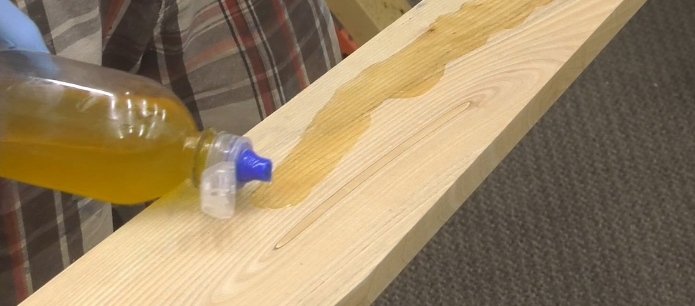
Of course, a 50/50 mix is only a starting point. As you gain experience, you may choose to customize the ratio by adding more or less mineral spirits to suit your needs.
Why Use Wipe-On Poly?
Straight from the can, polyurethane is pretty thick. It dries slowly, giving dust more time to settle and get stuck in the finish—or for the finish to sag and run on vertical surfaces. It’s also not absorbed by the wood as well as a thinner finish.
A wipe-on poly can be applied in layers. You might start with a 50/50 mix on bare wood to help fill the fine pores. After a light sanding, you could switch to a thinner mix—maybe two-thirds mineral spirits—applying very thin coats that dry quickly before dust can settle or runs can develop.
By applying many very thin coats of well-diluted poly, you can slowly build up a finish that is both durable and beautiful.
Another method is to thin the poly even further—perhaps 75% mineral spirits—and apply the first coat more liberally. Then, wet-sand with 320-grit paper along the grain to create a thin slurry that fills the pores, buff it with a cloth dampened with finish, and let it dry.
How Many Coats Should You Apply?
That depends on how much you thinned it, and how thickly you apply it. Thinner mixtures dry faster because they’re mostly mineral spirits, which evaporate away, leaving very little polyurethane on the surface. Obviously, you’ll need more coats to build up enough poly to protect the wood.
I suggest applying at least 3–5 coats of a 50/50 mix, and more if you thin it further. Remember: both the drying time and the level of protection each coat provides depend on how much you dilute it and how thinly you apply it.
Some woodworkers apply a very diluted mixture in ultra-thin coats that dry almost as fast as they’re wiped on. Others use a 50/50 mix in slightly thicker coats, which dry in about an hour.
If the coats are very thin, sanding between them can remove what you just put on. Instead, try buffing with a piece of a brown paper bag. For thicker coats (50/50 or greater), you can sand with 400–600 grit paper once fully dry. Then buff the final coat with the paper bag.
Final Thoughts
Applying and building up a finish is a huge subject. There are waxes, shellacs, and specialty mixtures that some folks swear by. But if you want to keep things simple while still achieving a durable, easy-to-apply finish, give homemade wipe-on polyurethane a try.
This post may contain affiliate links. If you make a purchase, we may receive a small commission.
Need some cool tools for your shop? Browse my Amazon Storefront for inspiration.
