
BEST TIPS FOR PARALLEL CLAMP MAINTENANCE
Parallel clamps are amazing tools—but dried glue on the bars can make them slip, bind, and lose their grip. With the right cleaning methods and simple preventative steps, you can restore them to full strength and keep them working flawlessly for years.
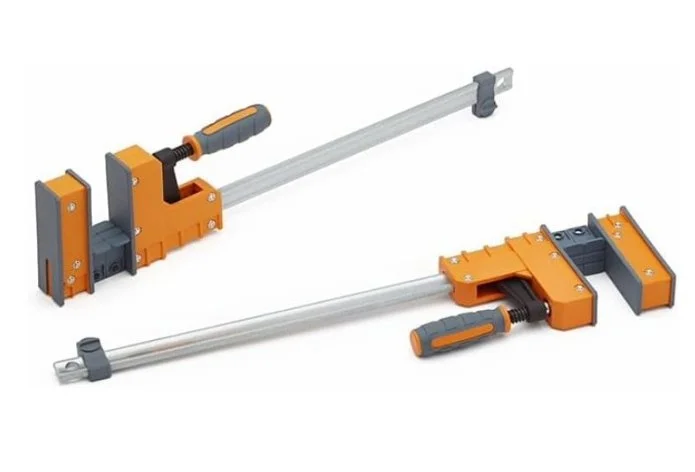
I love parallel clamps. They're incredibly strong, the jaws have a longer reach than other clamps, and their unique parallel jaws apply even pressure that reduces glue slippage. But their biggest downside? The lower jaw can't slide over gobs of dried glue on the bar.
So what do you do if your parallel clamps aren't working like they used to? A couple of things—but first, you have to get the glue off.
You can remove a lot of it with a scraper, but all the little notches on the bar make it difficult to get them clean with scraping alone. And if you don't get those clean, the clamp head may slip under pressure.
A heat gun—or even a torch—can help, but it's a good way to burn yourself. I've had some success with acetone. I liberally wipe it on, let it sit a minute or two, then follow up with a stiff wire brush and a good rag. Be sure to wear nitrile gloves, and I recommend a respirator, because too much acetone can be hard on the brain cells.
If you're willing to let it soak longer, there's a safer, more natural option: white vinegar. A few hours in that and the glue will come right off.
But how do you soak a long clamp in a tub of vinegar? Matt from MWA Woodworks has a great solution—if you're willing to spend the time building it and you have the room to store it between uses.
Of course, you can skip the softening and use a rotary wire brush on a power drill—if you don't mind being a little hard on your clamps. But that can be slow going and more labor-intensive than soaking, especially if you have a lot of clamps to clean. If this is your method of choice, I recommend a brass brush. And be sure to wear your safety glasses.
Since the jaws themselves are smooth, the glue scrapes off them relatively easily, so I wouldn't risk acetone or a wire brush on the plastic. If you want some help, try mineral spirits or denatured alcohol.
This may all sound like a lot of work—and it is. So do what you can to keep glue off the clamps in the future. The best way to do this is to wipe on a coat of paste wax. This will keep the glue from sticking to your clamps next time you use them. Reapply the wax every few projects.
While you're cleaning everything, you may as well add some lubricant to the internal mechanism. You want something kind of sticky so it won't drip out onto your wood. A silicone lubricant works well.
I don't like to spray the threads with silicone because they're exposed, and my hands may transfer the lubricant to my project. So I use beeswax for these.
When your parallel clamps are clean and tuned up, there's nothing better. I'm always looking to expand my collection. They aren't cheap, so I buy a couple each year to spread out the pain.
Happy woodworking!
This post may contain affiliate links. If you make a purchase, we may receive a small commission.
Need some cool tools for your shop? Browse my Amazon Storefront for inspiration.
