
WHY I DON’T USE GORILLA GLUE
Choosing the right glue can make or break a woodworking project, and today’s woodworkers have far more options than just “white or yellow.” This guide breaks down the strengths, weaknesses, and best uses of PVA, epoxy, hide glue, CA glue, and more—so every joint you make is the right one.
Years ago, I used to think white glue was for paper, yellow glue was for woodworking, and that was all there was to it. But with time and experience, I’ve learned that there exists a wide range of glues that are useful for woodworkers. Choosing the right one for your project can be a real game-changer. You can solve some really frustrating problems if you know a little bit about glue. So, in this article, I will pass along what I know so you can reap the benefits of glue technology in your workshop.
PVA Glues
Let’s start with PVA glues. PVA stands for polyvinyl acetate. It’s been around for quite a while, and the earliest versions were white. You probably used it in grade school, but it’s not just for making art with popcorn and paper. White PVA glue features a relatively long open time to get your work done, but it requires more time in the clamps before it sets up. In the past, white glue was widely used in woodworking, and it still is to some extent today. But yellow glues have become much more common in many workshops.
Yellow glue is still a PVA adhesive, but it's been modified with aliphatic resins. Some claim the yellow color is a natural result of the formulation, while others say they add yellow coloring to differentiate it from white PVA glue. Regardless, the color isn't the only difference. Yellow glue has been formulated to solve some of the problems many woodworkers had with white glue.
For example, while all glue is slippery and can cause your workpieces to creep when you apply clamping pressure, yellow glue is made to be a bit more tacky, especially if you let it sit for a minute before joining the surfaces. I'm not saying yellow glue won't slip at all; I’m just saying it is more manageable than white glue.
The same properties that make it extra tacky also cause yellow glue to set up faster. This may not be a good thing if you have a complicated glue-up to assemble, such as a bunch of finger joints. But it does mean you can remove your clamps after about an hour. Just don't stress the joint too much until it cures overnight.
Yellow glue is also a little less flexible, drying slightly harder than white glue. This may be one of the reasons it is also more resistant to moisture. However, as we will discuss shortly, only certain yellow glues are suitable for areas of high moisture, such as outdoor projects. Of course, that extra hardness also makes yellow glue less gummy when you sand it, compared to the more flexible white glue.
In my experience, yellow glue is generally a bit stronger than white glue. But either may be plenty strong in many woodworking applications. White glue does have its place in woodworking, particularly because it dries clear and will not show a visible seam like yellow glue might. This makes it very desirable for those who bookmatch panels, for example.
It is true that yellow glue is the workhorse of many workshops, but not all yellow glues are the same. Titebond, in particular, makes three formulations of yellow glue. Other brands like Elmers and Gorilla also make multiple versions. Titebond is not a sponsor; it’s just what I use, and all three of these formulas have a place in my workshop because they each can do things that you may not have known about.
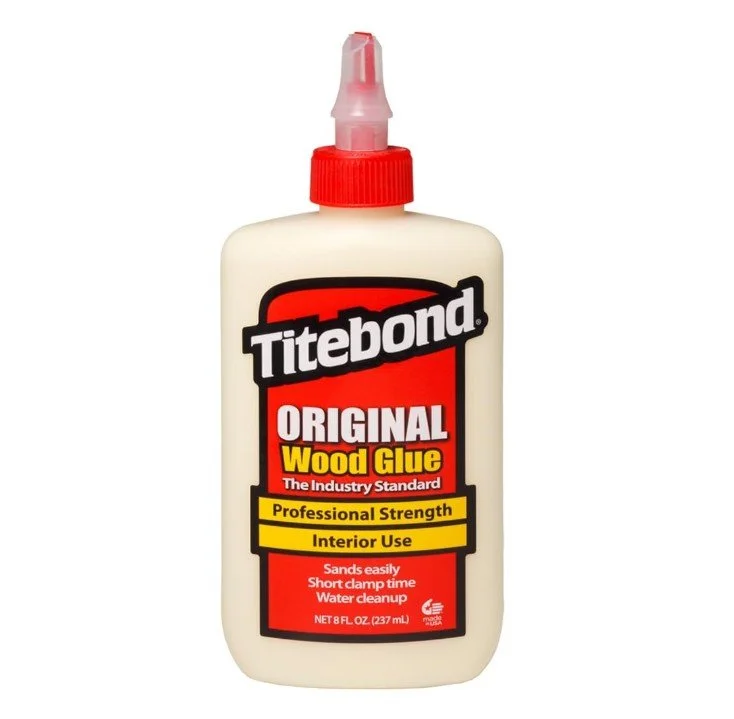
Most of the time, I use the original formula because it's fairly inexpensive and it's easy to clean up with water. If I get this on my clothes, it usually comes out in the washer. Those are the main reasons I like it—cost and cleanup. (By the way, links to all of the products mentioned are included below this article if you want to make sure your shop is well-equipped too.)
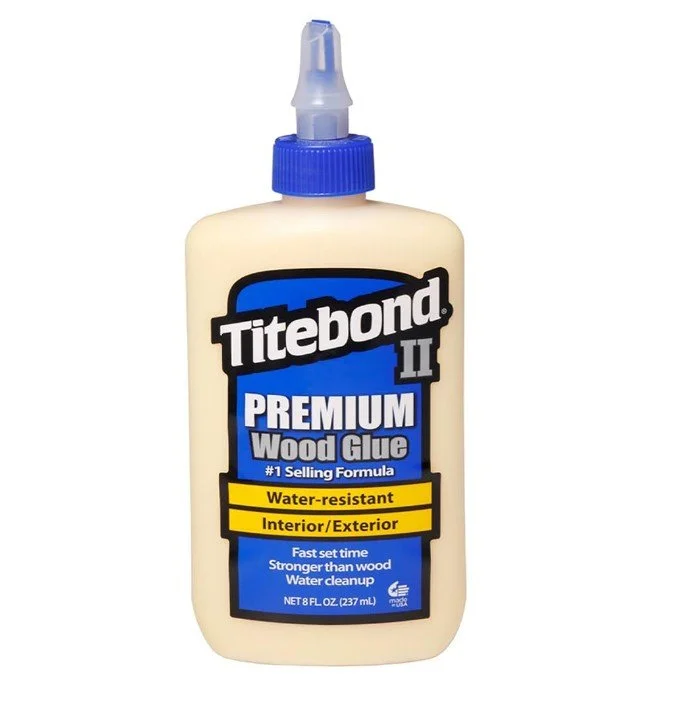
Titebond II is a slightly different formulation. It’s not coming out of your clothing once it dries, so watch where you wipe your hands. That’s because it is water-resistant, so it may be used for projects that will be in areas of high humidity, such as in a bathroom, or even projects that will be outdoors in the rain.
This version also gets tacky even faster than regular yellow glue, so I may choose it when I have something I know is going to be a problem keeping aligned, such as a bent lamination of shopmade veneer. Of course, that also means I have to work quicker during assembly because it has to be in clamps in less than four minutes.
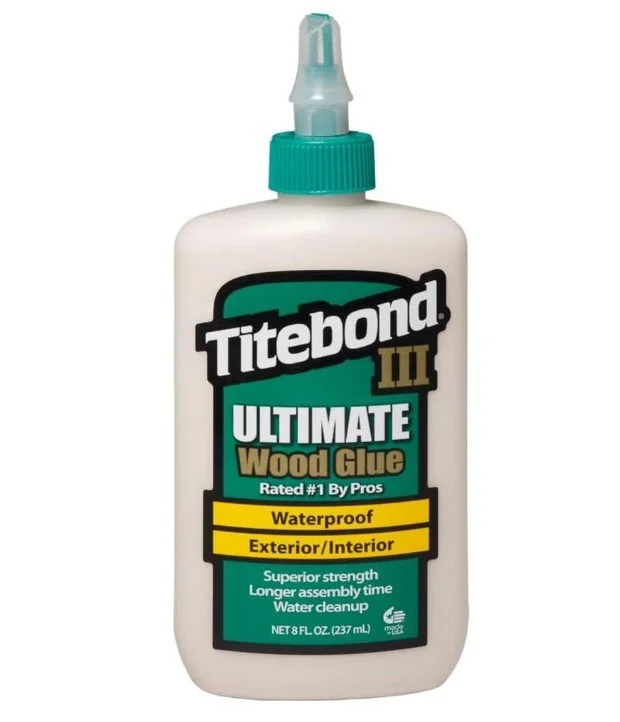
Titebond III is a specialty formula that I really like for some specific situations. It’s fully waterproof rather than just water-resistant, so I am more confident using it on outdoor projects. It’s also among the strongest PVA glues around, making it a good choice where strength is of the utmost importance.
This version may also be applied at lower temperatures. When I had a drafty garage shop that I struggled to keep above 50 degrees in the winter, I would use Titebond III. I also like its darker color when I’m working with something like walnut.
But I reach for this formulation most when I need more time to assemble a glue-up because it has about twice the working time of standard PVA formulas.
I really recommend you have a bottle of each, even just a small bottle of the two specialty formulas, so you can use their unique advantages in your shop.
Non-PVA Adhesives
Let’s move on to some non-PVA adhesives I also find essential.
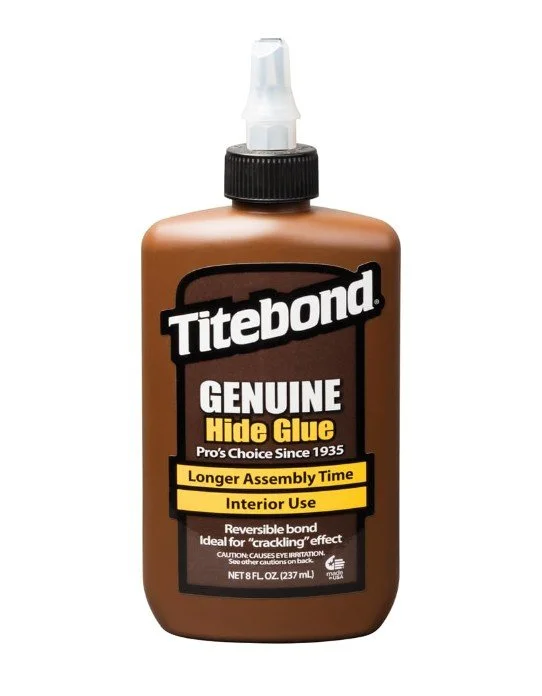
This is liquid hide glue. It’s a modern version of the animal glue that was used for centuries. I like hide glue because it takes longer to set up, which gives me lots of time to adjust my assembly, and because the bond may be reversed with heat. This makes it my go-to adhesive for any joint that may be under so much stress that the wood itself might eventually break. Chairs are good examples. Someday, someone may have to replace a broken leg or stretcher, and if you assembled the joints with hide glue, a little steam will soften it up so it may be disassembled and repaired.
Hide glue only lasts about a year on the shelf, so don’t buy it now. Wait until you decide to build a chair or something, then order some for that project.
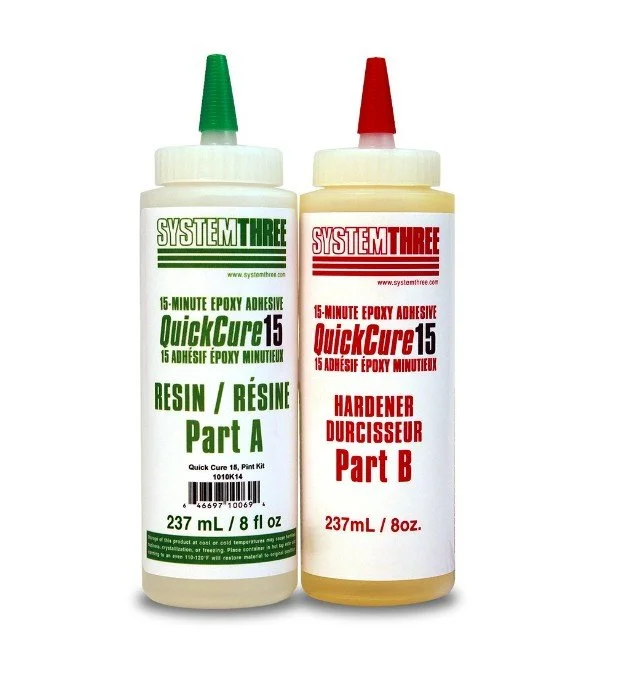
Epoxy is another favorite of mine. I sometimes use the injector style, but a two-bottle set like the picture above is much more economical.
Epoxy is great for bonding things that aren't made from wood. I use it in jig-making quite a bit, but it is also useful for really complex glue-ups that require a lot of assembly time. If you're gluing up a dovetailed or finger-jointed chest, for example, use epoxy and you won’t have to stress out so much.
Additionally, epoxy is great for its gap-filling properties. For example, maybe you used a cheap dado set to cut a tenon and you ended up with a rough surface. Yellow glue won’t fill in those gaps well. You’ll have less effective glue surface and a weaker joint. But epoxy can not only fill in the gaps between two rough surfaces, it can also secure a loose or imperfect joint.
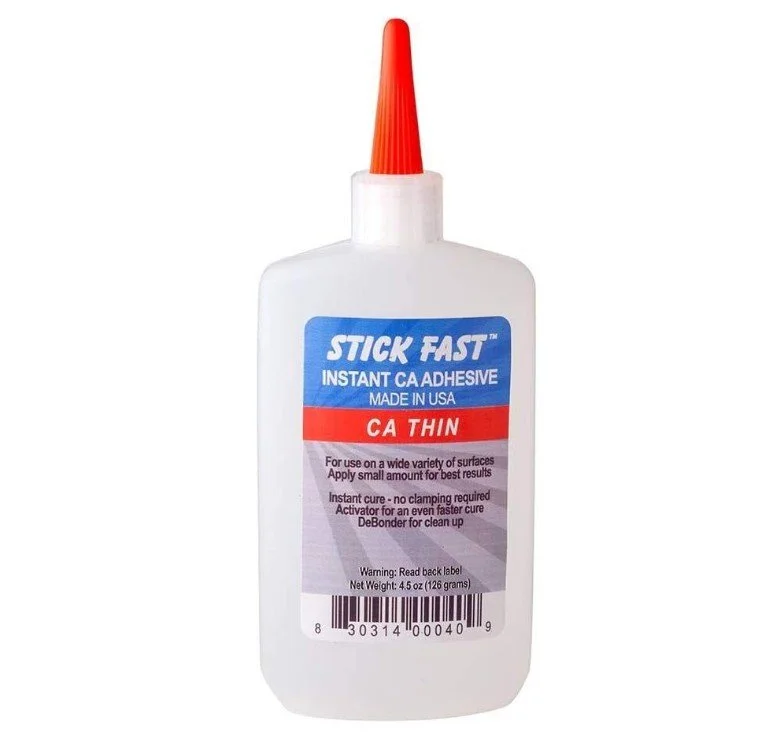
I also love cyanoacrylate adhesives, or CA glue. We may eventually make a whole video about all the ways you can use CA glue in the workshop. I mostly use it when I need a really fast bond. I can put the glue on one surface and an activator spray on the other, and it will form a full, ready-to-use bond in just two or three seconds. That’s a game-changer when I need to build a jig quickly and get back to work, or for project parts that are difficult to clamp in place. You simply don’t need clamps with CA glue. The bond is strong but it is brittle, so it's not for every situation.
I have three different bottles of it. One is very thin, which is handy for getting into fine cracks. I may use the medium consistency the most, followed by the thick stuff, which won’t run down vertical surfaces. And of course, the spray activator is a must with CA glue. If it’s not instant, what’s the point?
Interestingly, it is the moisture in the air that causes these tubes to dry up on you. I keep mine in the freezer. The glue itself will not freeze, but the ultra-low-humidity environment keeps them from drying out. Again, we’ll make a whole video about CA glues down the line.
Another adhesive I think every shop should keep on hand is hot-melt glue. This is not just for crafts; it’s really handy for when you need a quick and easily reversible bond. I may use hot-melt glue to attach guide pieces to project parts when I am routing or if I want to sandwich two pieces together to bore identical holes. You can use it for attaching templates. It has good shear strength but low tensile strength, which means it will hold together during these operations, but it may be pried apart relatively easily. It’s a low-cost alternative to double-sided tape with a gap-filling advantage for uneven surfaces. I have even used it for making custom shims for table saw throat inserts.
Finally, because I know some will ask about it, I'll touch on polyurethane adhesives, such as Gorilla Glue. I don't really use this stuff because I think there are better options. Polyurethane glue is waterproof, but so is Titebond III. Poly glue fills gaps and bonds with multiple types of materials, but so does epoxy. One thing I might use it for is damp wood because poly glue needs moisture to work. But I've never had a reason to do that. It’s also messy because it foams out of the joint, so I tend to avoid it.
I am sure there are other types of adhesives that are useful for woodworking. I know some folks who use construction adhesive for some projects. But these are the ones I use most, and I think you should give one or more of these a try in your shop.
Titebond I (General use) - https://amzn.to/42oXXfg
Titebond II (Tacky, faster dry, water resistant) - https://amzn.to/3YfpsW7
Titebond III (longer open time, water proof, dark color) - https://amzn.to/3DY1BUb
Titebond Liquid Hide - https://amzn.to/42rjqEn
2 Part Epoxy - https://amzn.to/42qD3fK
Stickfast CA glue - https://amzn.to/3tgz3xx
Spray Activator - https://amzn.to/4lrnf46
Hot glue gun - https://amzn.to/3raqyBt
This post contains affiliate links. If you make a purchase, we may receive a small commission.
Need some cool tools for your shop? Browse my Amazon Storefront for inspiration.
