
REMOVING TABLE SAW RUST SAFELY
Learn how to clean and maintain a cast-iron table saw top without damaging it. This guide covers rust removal, safe cleaning methods, and proper waxing to prevent future corrosion and improve performance.
Keeping your table saw top clean and rust-free isn’t just about looks—it’s about accuracy, safety, and longevity. In this article I want to walk you through how to clean and maintain a table saw top the right way, and just as importantly, how to avoid damaging it in the process.
I emphasize safely because improper cleaning can permanently damage your saw, as I’ll explain below.
The Enemy of Your Table Saw: Rust
The biggest enemy of a cast-iron table saw top is rust. For many woodworkers, this is an ongoing battle because our shops are often garages or sheds with no temperature or humidity control.
Here’s how it happens:
Temperature changes cause condensation
Condensation leads to moisture on the cast iron
Moisture leads to rust
And eventually…
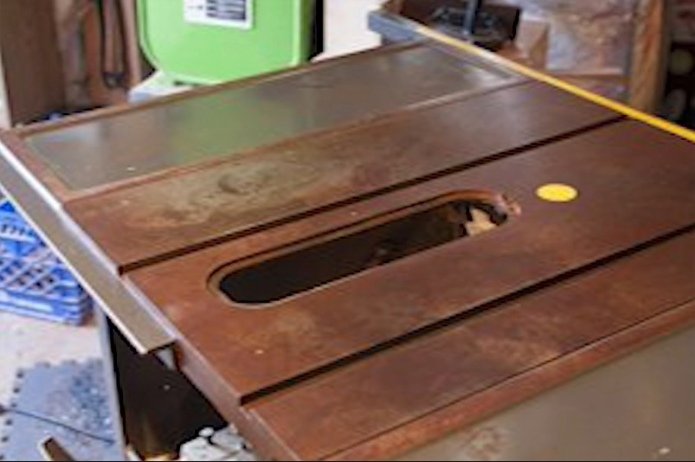
…your saw top can look pretty ugly.
Dealing With Heavy Rust
If your saw is heavily rusted, you’ll need a chemical rust remover.
Some common options include:
These products are effective, but they’re best reserved for worst-case scenarios.
Removing Light Surface Rust
Ideally, you catch rust early—when it’s just a light surface film. In that case, harsh chemicals aren’t necessary.
I usually use:
WD-40, they claim to break the bond between the rust and the good iron beneath. I don’t know for sure, but it does work for me.
Kerosene, which also works well (though I avoid it because of the fumes)
What Not to Do
When you see rust, your first instinct might be to grab a wire brush or aggressive sandpaper. Don’t do it.
Cast iron is surprisingly soft. Aggressive brushing or sanding can:
Leave thousands of deep scratches
Create places where rust can return even faster
Compromise the flatness of the table
You can damage the surface much faster than you might think.
The Right Way to Clean a Saw Top
A little patience and gentler abrasives will give you far better results. Good options include:
I often use an electric sander for convenience, but with strict limits:
400 grit sandpaper or higher only
Light pressure
Let the abrasive do the work
Remember: the goal is to clean the surface—not to grind it down.
Shiny Isn’t the Goal
Cleaning means removing:
Surface rust
Burrs
Built-up grime
It does not mean making the top look brand new.
Over time, cast iron develops a patina—and maybe a few stains here and there, like the mysterious ring left by the guy who carelessly set his cold drink on your saw and was never heard from again.
Some of these spots go deeper than the surface. That’s fine. Tools are allowed to look like tools.
Final Cleaning Before Protection
Once I’m satisfied that the surface is smooth and free of loose rust, I wipe it down thoroughly using a solvent that cleans without adding moisture:
Naphtha
Mineral spirits / white spirits
Denatured alcohol
Even a light coat of WD-40
The goal is to remove residue and oils without introducing water that could start new rust.
Protecting the Table Saw Top
Now it’s time to protect the surface and make it slick.
My go-to solution is paste wax:
Cheap
Easy to apply
Very effective
Paste wax is typically a blend of carnauba and other waxes softened with mineral spirits or oil-based solvents.
How to Apply Paste Wax
Spread a thin, even coat over the surface
Let it dry for a few minutes
Buff it off with a clean cloth
Buffing hardens the wax, preventing it from transferring to your workpieces.
The Wax Myth—Busted
There’s a persistent myth that waxing cast-iron tools will interfere with wood finishes. Let’s put that to rest. A thin, well-buffed coat of paste wax:
Will not contaminate your wood
Will not affect finishes
Will almost certainly be sanded off long before finishing anyway
Even if microscopic particles did transfer, they wouldn’t be enough to matter.
Why Waxing Is Worth It
What wax will do is:
Make the surface slippery as snot
Make cutting easier and safer
Protect the cast iron from rust
Maintenance is simple:
When the top stops feeling slick, apply another coat
If wax buildup develops after several coats, remove the old wax with naphtha or another solvent and start fresh
No sandpaper is needed for routine maintenance. In fact, if you keep up with waxing, you should never need to sand the table saw top again.
Final Thoughts
A clean, protected table saw top is easier to use, more accurate, and far less likely to rust. With gentle cleaning and regular waxing, you can keep your saw in great shape for decades—without risking damage to the cast iron.
Take your time, use the right materials, and let your tools show a little honest wear. That’s how you know they’re being used.
This post may contain affiliate links. If you make a purchase, we may receive a small commission.
Need some cool tools for your shop? Browse my Amazon Storefront for inspiration.
