

WORLD’S STRONGEST CORNER JOINT!
Discover how to create the Triple-Castle Joint—an elegant, ultra-strong woodworking joint made from three identical pieces and four simple cuts. This step-by-step guide covers layout, hand-sawing tips, assembly, and finishing for a stunning joinery project.

THE FORGOTTEN HISTORY BEHIND JAPANESE CHISELS
Discover the history, technology, and craftsmanship behind Japanese woodworking chisels—from samurai sword origins to laminated steel, hollow backs, and traditional handles. Learn what makes these tools unique and whether they deserve a place in your workshop.

HOW TO BEND 3/4” PLYWOOD
Learn how to kerf-bend plywood to create strong, smooth arches for cabinetry and built-ins. This guide covers kerf spacing, grain orientation, bending forms, glue-ups, smoothing techniques, and expert tips for achieving clean, professional curved woodwork.

THE HISTORY OF SANDPAPER
Discover the real history of sanding, from ancient Egyptian abrasives to sharkskin and early sandpaper used by master woodworkers. Learn why sanding is a time-honored technique—and why traditional craftsmen would have loved today’s premium sandpapers.

THE TRUTH ABOUT HOLLOW GRINDS: DO THEY REALLY WEAKEN YOUR EDGE?
Discover the truth about hollow grinding and edge durability. Learn why grinding wheel sharpening doesn’t weaken your tools and how simple technique keeps edges strong.

HOW SIMPLE WOOD SCREWS ARE NO LONGER THE SAME
Discover how drywall, Spax, and GRK screws perform in hardwood projects. Learn which screw features—serrated threads, fluted tips, and head geometry—improve grip and prevent splitting for stronger, cleaner joints.

WILL A CHEAP 2X6 PINE WORKBENCH LAST?
Eight years later, a recycled-construction-lumber workbench is still rock solid thanks to clever layered joinery and bone-dry salvaged wood. While a few vise placements and design choices could be improved, the bench has proven that you don’t need expensive hardwoods to build a durable, high-quality workbench.

THE CLEVER 10-SECOND WOODWORKING TRICK I USE TO IMPRESS PEOPLE
Learn an easy and reliable technique to make precise end, cross, and angled lap joints for your woodworking projects. Using a shim and stop block method ensures a perfect fit every time, whether on a table saw or router table.
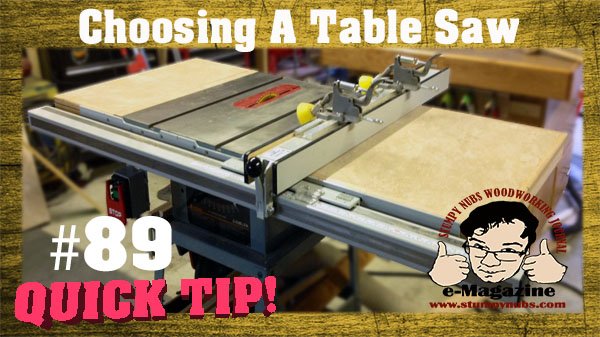
CHOOSING A TABLE SAW
Confused about which table saw to buy? Learn the differences between portable, contractor, hybrid, and cabinet saws, including pros, cons, and expert tips to pick the right saw for your shop and budget.

JOINTER VS PLANER VS SANDER - WHERE SHOULD YOU START?
Not sure whether to buy a jointer, planer, or drum sander first? This guide explains their roles, differences, and which tool to prioritize so you can flatten, thickness, and smooth boards effectively without wasting money or effort.

BREAKING: THE USA IS SWITCHING TO METRIC!
A humorous look at America’s slow shift to the metric system, showing how the U.S. already uses metric in everyday life more than most people think.

THE SECRET TO SILKY SMOOTH FINISHES
Learn how to sand between coats for a smooth, professional wood finish. Discover tips for handling raised fibers, dust nibs, shrinkage, and solvents to achieve a flawless result.

THE TRUTH ABOUT MDF WILL MAKE YOU THINK TWICE!
Discover the benefits and proper uses of MDF in woodworking. Learn why this stable, paintable material is ideal for panels, built-ins, and veneered furniture when handled correctly.

DUST COLLECTION DUCT WORK: WHY SIZE MATTERS
Learn how to size dust collection ducts and hoses for your workshop by balancing airflow volume, velocity, resistance, and pressure. Maximize efficiency and minimize clogs with the right setup for your dust collector or shop vacuum.

THE THIN KERF DEBATE: A WOODWORKER’S PERSPECTIVE
Nowadays, like anything else, people love to argue about the pros and cons of blade thicknesses. And there’s a lot of misinformation out there—whether you should even be using thin kerf blades, and whether the wrong blade choice can make your table saw more dangerous.
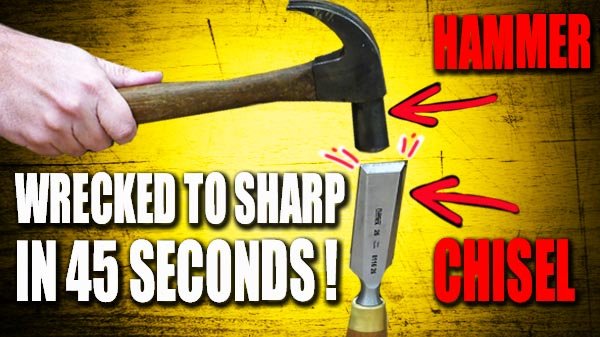
A QUICK AND EASY WAY TO SHARPEN TOOLS
Stop struggling with dull chisels—this drill-press method sharpens them in under a minute using acrylic discs, a simple jig, and Cubitron sandpaper. Fast, efficient, and precise, it keeps your tools razor-sharp so you can get back to woodworking without delays.

INDESTRUCTIBLE: I have NEVER seen a box made like this before
This box features a one-of-a-kind “impossible dovetail joint” that cannot be assembled or disassembled conventionally, inspired by centuries-old German log cabin joinery. Its creation required careful planning, compound-angle cutting, and meticulous assembly, making it both a technical challenge and a unique conversation piece.

I FIGURED OUT HOW TO NEVER PAY FOR WOOD AGAIN
Woodworking doesn’t have to break the bank—there are countless ways to find low-cost or even free lumber, from firewood and pallets to yard sales and local sawyers. With a little effort and creativity, you can score high-quality wood while saving money for your next project.

COMMON WORKSHOP DUST COLLECTION MISTAKES
Many woodworkers waste time and money on ineffective dust collection systems. From shop vacs to ductwork mistakes, using the right equipment and setup is essential for clean air, safety, and efficient chip collection.

THE TRUTH ABOUT 2X4S: HOW BIG LUMBER IS RIPPING YOU OFF
Historically, 2x4s were closer to their nominal dimensions, but inconsistencies and industrialization led mills to adopt standardized sizes. Today, drying and planing reduce a board’s dimensions to roughly 1½" × 3½", a practice known as nominal sizing, which prioritizes uniformity and profit over true measurements.