
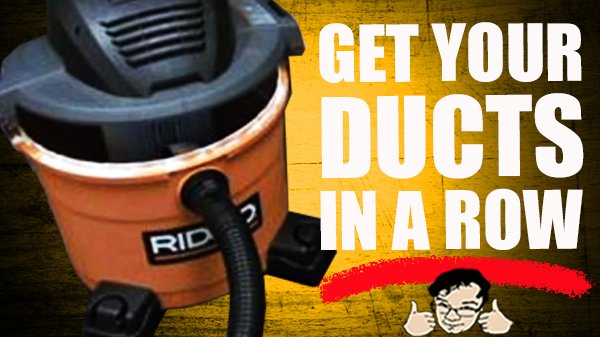
DUST COLLECTION DUCT WORK: WHY SIZE MATTERS
Learn how to size dust collection ducts and hoses for your workshop by balancing airflow volume, velocity, resistance, and pressure. Maximize efficiency and minimize clogs with the right setup for your dust collector or shop vacuum.

THE THIN KERF DEBATE: A WOODWORKER’S PERSPECTIVE
Nowadays, like anything else, people love to argue about the pros and cons of blade thicknesses. And there’s a lot of misinformation out there—whether you should even be using thin kerf blades, and whether the wrong blade choice can make your table saw more dangerous.
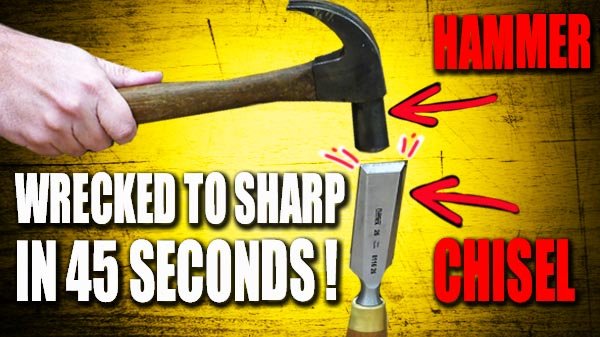
A QUICK AND EASY WAY TO SHARPEN TOOLS
Stop struggling with dull chisels—this drill-press method sharpens them in under a minute using acrylic discs, a simple jig, and Cubitron sandpaper. Fast, efficient, and precise, it keeps your tools razor-sharp so you can get back to woodworking without delays.

INDESTRUCTIBLE: I have NEVER seen a box made like this before
This box features a one-of-a-kind “impossible dovetail joint” that cannot be assembled or disassembled conventionally, inspired by centuries-old German log cabin joinery. Its creation required careful planning, compound-angle cutting, and meticulous assembly, making it both a technical challenge and a unique conversation piece.

I FIGURED OUT HOW TO NEVER PAY FOR WOOD AGAIN
Woodworking doesn’t have to break the bank—there are countless ways to find low-cost or even free lumber, from firewood and pallets to yard sales and local sawyers. With a little effort and creativity, you can score high-quality wood while saving money for your next project.

COMMON WORKSHOP DUST COLLECTION MISTAKES
Many woodworkers waste time and money on ineffective dust collection systems. From shop vacs to ductwork mistakes, using the right equipment and setup is essential for clean air, safety, and efficient chip collection.

THE TRUTH ABOUT 2X4S: HOW BIG LUMBER IS RIPPING YOU OFF
Historically, 2x4s were closer to their nominal dimensions, but inconsistencies and industrialization led mills to adopt standardized sizes. Today, drying and planing reduce a board’s dimensions to roughly 1½" × 3½", a practice known as nominal sizing, which prioritizes uniformity and profit over true measurements.

THE LIES AND CONFUSION OF TUNG OIL WOOD FINISH
Tung oil can be one of the most beautiful natural wood finishes, but marketing hype and confusing blends have misled generations of woodworkers. This guide breaks down the differences between pure and blended tung oil, how to identify what’s in your can, and how to apply it properly for the best results.

CASE HARDENING: THE SCOURGE OF WOODWORKING
Case hardening happens when lumber is dried too quickly, creating internal stress that causes boards to warp, pinch, or even crack once cut. Learn how to spot this hidden defect before it ruins your wood — and how to handle it if you find it.
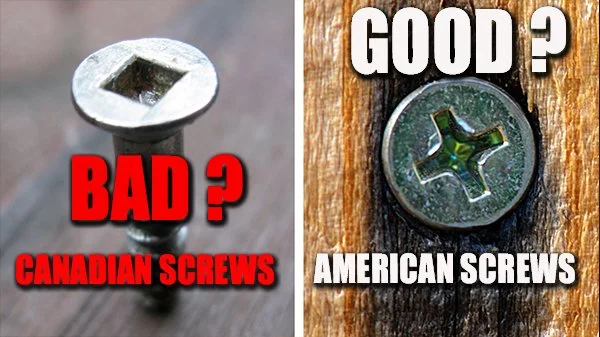
THE GREAT SCREWDRIVER WARS
It’s been more than 200 years since Canada and the United States fought a war against each other, and if it ever happens again, it won’t be over important issues like who has the best pancakes or the best version of Chris Farley. It will be over something that has divided not just North America, but the entire world for over a century: Which screwdriver is best—the Canadian Robertson head, or the American Phillips head?
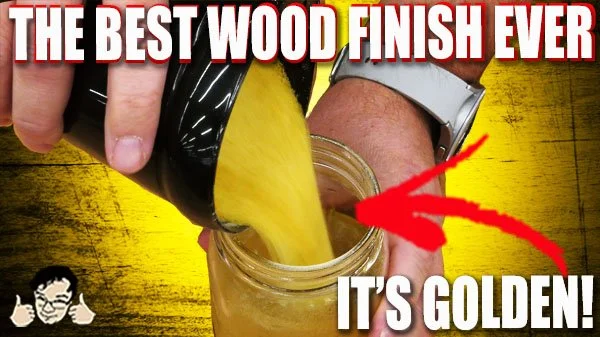
THIS SIMPLE WOOD FINISH WILL SAVE YOU DAYS OF SHOP TIME! (SHELLAC)
For centuries, shellac was widely considered the best wood finish in the world. Then, modern finish manufacturers convinced us that shellac was old-fashioned. “That’s what your grandfather used! The modern woodworker uses polyurethane!”

A FORGOTTEN TECHNOLOGY FROM THE OLD DAYS OF WOODWORKING!
Many people believe the absence of nails is a sign of good craftsmanship. And I can't say I blame them because they don't make nails like the used to. The modern nail isn’t designed for performance, it's designed for price. They are cheap to make. In this article I'll remind you of the little known, and I think very interesting features that make cut nails superior to wire nails, and perhaps a better choice for your next project.

FRENCH CLEATS - ARE THEY WORTH THE HYPE?
These days french cleats have become pretty popular among various YouTubers and in the overall maker movement. But mostly in the context of cleat walls. This is a big thing online. Folks put rows of wood strips all over their walls and make all sorts of handy tool holders that may be hung and arranged wherever they like.

THE BEST ROUTER TRICK I KNOW - MAKING PICTURE FRAMES WITH REGULAR ROUTER BITS
Router bits aren't cheap. I think that's why a lot of folks just use the same one or two profiles on every project. Those are simply the bits in their set, and they don't have the budget to buy a fancy, complex profile bit just to make one project. But early on in my woodworking career I learned a skill that saved me a lot of money…

ELECTRIC HAND PLANERS: TIPS AND TRICKS
I often find myself surprised by the popularity of electric hand planers. Growing up, I only saw these tools used for specific tasks like installing doors or during rough home remodeling...

UNLOCKING THE FULL POTENTIAL OF YOUR BANDSAW
For years, I thought I had the bandsaw figured out. My method was straightforward: cut as close to the lines as possible and then rely on sanding to clean up the edges. It worked, but it was labor-intensive, generating a lot of dust and requiring significant effort. It wasn’t until I discovered a new technique for steering the blade that I realized I had been missing out on the bandsaw's true potential.

UNDERSTANDING AIR-DRIED VS. KILN-DRIED LUMBER
When it comes to woodworking, one of the most important decisions you'll make is choosing the right lumber for your project. But how dry does it really have to be? And can you trust lumber that you've cut and dried yourself?

MANY WOODWORKERS USE THESE WRONG!
Do not let the fru-fru woodworking purists tell you that you can’t use biscuits, dowels, or pocket screws and still call yourself a woodworker. A good housebuilder doesn’t insist every wall be built from cut stone because not every wall needs to absorb a cannonball. The goal is to build something that is beautiful, functional, and durable. Those are the standards good woodworkers are measured by. How you achieve those standards is a personal decision.

AN ANCIENT WOOD FINISH FORMULA THAT CAN NOT BE MESSED UP!
Wood finishing can be a very intimidating subject for a lot of woodworkers, and I am often asked if there is a simple, effective finish that can't be messed up, doesn't take a lot of time, doesn't cost as much as the wood itself, and which looks great to the eye and is pleasing to the touch.