
WHICH WOODWORKING CLAMPS SHOULD YOU BUY?
Choosing the right clamps can save you a surprising amount of money, frustration, and shop space. Learn the strengths and weaknesses of 12 clamp types—and discover which ones are actually worth buying first as your woodworking needs grow.
Let’s talk clamps. A lot of new woodworkers are confused about what’s out there and which they should buy. That confusion often leads to wasted money—as many veteran woodworkers with piles of barely-used clamps can tell you.
This guide is meant to save you both the money and the frustration that come from buying the wrong clamp for the job. We’re going to walk through the pros and cons of 12 different types of clamps, including a few specialty options many woodworkers don’t even realize exist. And at the end, I’ll give you my personal recommendations for building a smart clamp collection without wasting your budget.
Because while the saying goes, “You can never have too many clamps,” I’m here to tell you that you absolutely can.
I know because I do.
C-Clamps: Strong, Heavy, and Mostly Retired
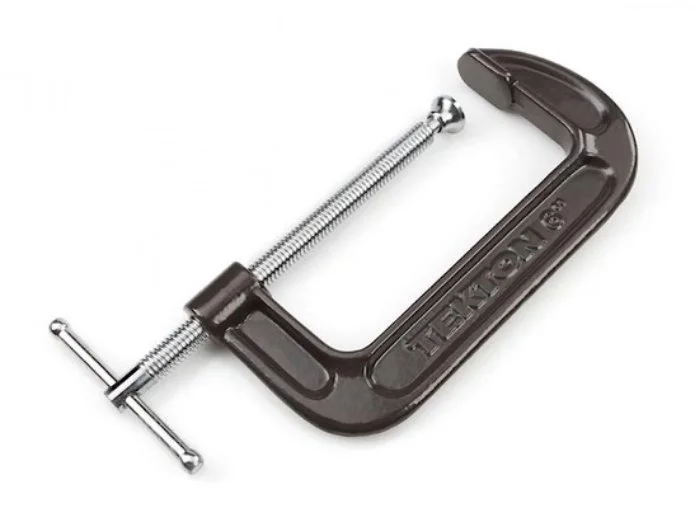
C-clamps used to be the default clamp for woodworkers, metalworkers, pretty much everyone. While some people still swear by them, I don’t find them especially useful for woodworking.
They’re:
Heavy
Slow to tighten
Awkward to position
And the swivel pads often seize up, causing the screw to rotate your workpieces out of alignment as you tighten them.
Yes, they apply tremendous pressure—but that’s not always a good thing in woodworking. Excessive force can easily dent or mar work pieces.
I keep a few around for welding and metalworking, but that’s about it.
Wooden Hand Screw Clamps: Underrated Classics
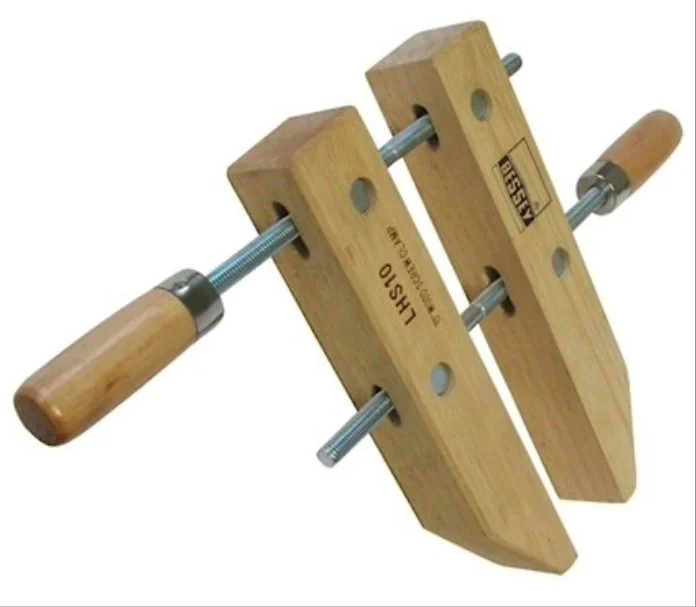
Modern woodworkers often dismiss wooden hand screw clamps as old-fashioned.
That’s a mistake.
These clamps are incredibly versatile.
They:
Apply a surprising amount of pressure
Have non-marring wooden jaws
Allow adjustable jaw angles for tapered parts
Offer excellent throat depth (although the more throat depth, the bigger the clamp will be)
They’re also fantastic for odd jobs around the shop:
Holding small parts safely at the router table or drill press
Clamping pieces upright during assembly
These are one of those tools you appreciate more the longer you own them.
Spring Clamps: Handy, But Easy to Overbuy
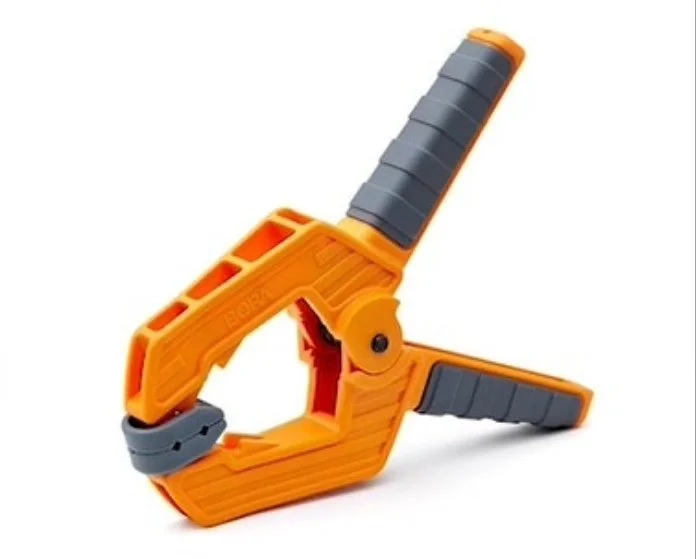
A lot of beginners buy huge piles of spring clamps because they’re inexpensive.
And yes—they’re useful.
Spring clamps work well when:
You need light pressure
You need a lot of clamps quickly
Speed matters more than force
But they’re also limited:
Cheap ones don’t exert a great amount of pressure
Their pivoting design makes it frustrating to keep glue surfaces aligned as you apply pressure.
Where they really shine is around the shop itself:
Holding stop blocks
Securing cords out of the way
Temporarily positioning jigs and fixtures
Some models include ratcheting mechanisms for extra grip, though that sacrifices some speed.
And specialty versions like Bandy Clamps—with their flexible rubber-band jaws—can be extremely useful for edge banding and awkward shapes.
Still, most woodworkers probably don’t need three dozen of them.
Ask me how I know.
F-Style Clamps: The Best All-Around Clamp
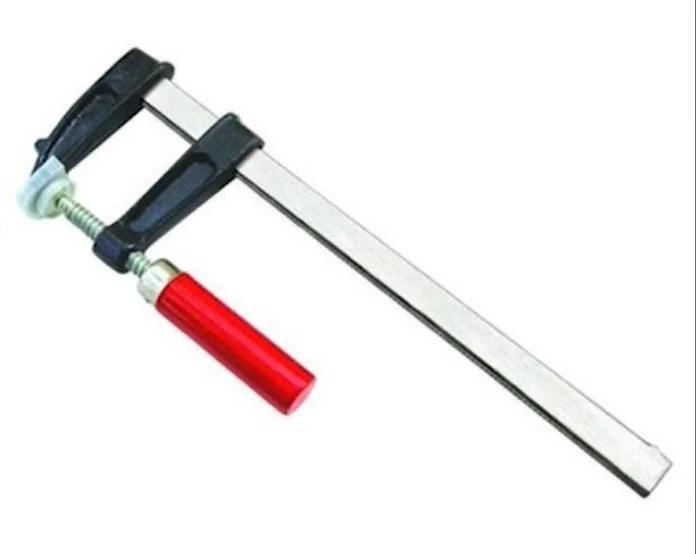
If I had to recommend one clamp style for most small shops, it would probably be the F-style clamp.
Why?
Because they’re:
Affordable
Lightweight
Strong
Versatile
They come in a huge range of sizes and handle most project assembly tasks extremely well.
The downside is that the longer versions can flex under heavy pressure, and traditional screw pads sometimes rotate with the handle, shifting parts out of alignment.
Some newer designs solve this with:
Non-rotating piston heads
Ratcheting cam mechanisms
The ratcheting versions are especially fast to use, though they don’t generate as much force.
Still, for general woodworking, F-clamps are hard to beat.
Pistol-Grip Clamps: The Ones I Reach for Most
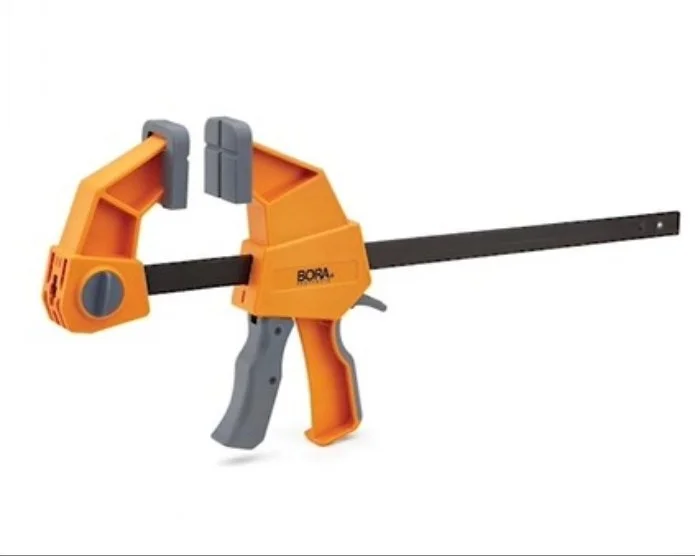
These are probably the most convenient clamps in my shop.
Operate with one hand
Apply plenty of pressure for most glue-ups
Work extremely quickly
Cheap ones, however, tend to break if over-tightened.
I use these constantly for:
Small assemblies
Medium glue-ups
Temporary holding tasks
And honestly, no matter how many I own, I always wish I had more.
Pipe Clamps: Brutally Strong… and Brutally Heavy
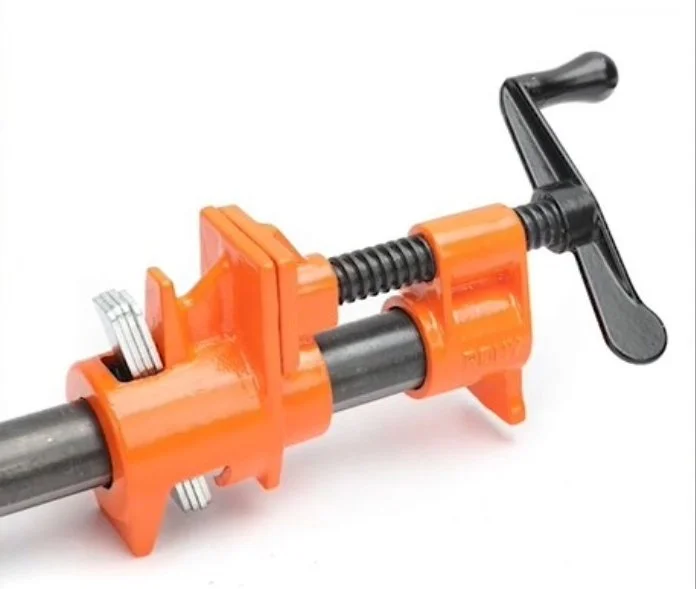
Pipe clamps have been around forever because they work.
They’re:
Extremely strong
Available in virtually any length
Expandable with couplings
If you need to force a warped board into submission during a glue-up, pipe clamps will absolutely do it.
But they’re also:
Heavy
Clunky
Awkward to maneuver
Personally, I mostly reserve them for large panel glue-ups where they can stay flat on the bench.
And watch out for glue squeeze-out. Moisture can react with the pipe and stain woods like oak with dark discoloration.
Bar Clamps: Lightweight Panel Glue-Up Specialists
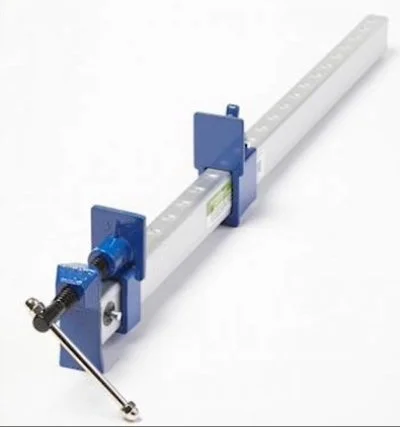
Bar clamps are basically the lighter, less aggressive cousins of pipe clamps.
They’re:
Inexpensive
Lightweight
Great for panel glue-ups
But they aren’t nearly as strong, and their shallow throat depth limits their usefulness for larger assemblies.
Still, if your main focus is edge-gluing boards, they’re a perfectly reasonable option.
Parallel Clamps: The Luxury Upgrade
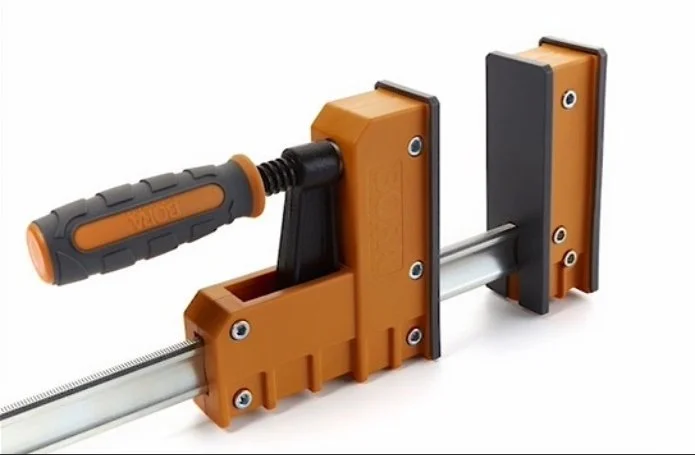
Parallel clamps are designed so the jaws stay perfectly parallel as pressure is applied.
That makes them outstanding for:
Panel glue-ups
Laminations
Cabinet assembly
They combine the strength of pipe clamps with much more convenient jaw geometry.
And unlike pipe clamps, the large jaws distribute pressure beautifully across project parts.
The downsides?
They can be heavy.
They can be expensive.
If money were no object, I’d fill the shop with them. But for most woodworkers, it makes sense to buy a few and expand gradually over time.
Band Clamps: The Clamp Most Beginners Forget
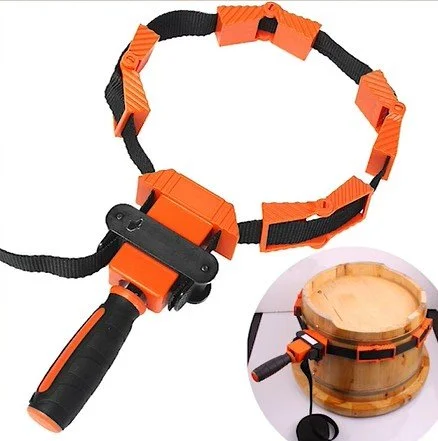
Band clamps are incredibly useful for:
Mitered frames
Boxes
Awkward shapes
Yes, you can improvise with ratchet straps—but dedicated band clamps with corner blocks are far easier to use accurately.
Most woodworkers don’t buy these early enough.
But once you own a couple, you’ll wonder how you lived without them.
Miter Clamps: Perfect for Frames and Boxes
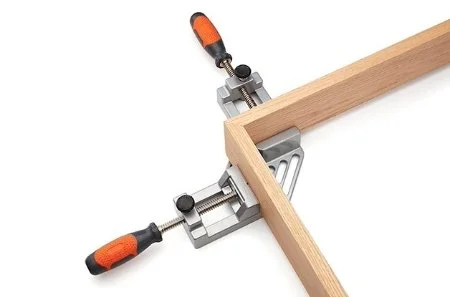
If you build a lot of mitered frames, miter clamps are worth considering.
They hold assemblies at exactly 90 degrees while you:
Apply glue
Shoot pin nails
Install fasteners
And despite what beginners often assume, you usually don’t need four of them.
One good corner clamp is often enough.
Specialty Clamps That Solve Specific Problems
Some clamps exist for very particular jobs—and they can be incredibly effective.
Face-Frame Clamps
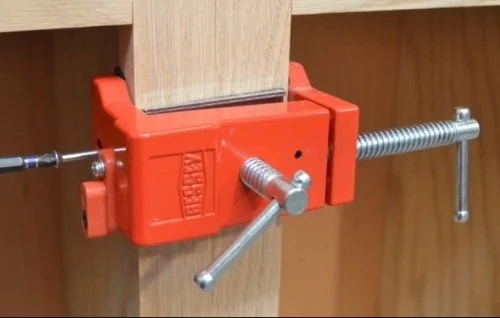
Designed specifically for cabinet face frames, these hold the frame flush while you drill and drive screws.
Drawer Front Clamps
Made for positioning and securing drawer fronts during installation.
Face Clamps
These resemble locking pliers with flat pads instead of toothed jaws.
They’re:
Fast
Powerful
Excellent for pocket-hole joinery
Some newer versions even self-adjust automatically.
If you do a lot of pocket screws, pin-style face clamps are absolutely worth owning.
So… Which Clamps Should You Actually Buy?
Here’s the truth:
The “best” clamps depend heavily on:
The projects you build
Your workflow
Your personal preferences
I dislike pipe clamps. Some people love them.
I love pistol-grip clamps. Some people hate them.
Usually, the clamps you become comfortable using are the ones you keep reaching for.
But if you’re starting from scratch, here’s the collection I’d recommend.
My Recommended Starter Clamp Collection
Start With:
That combination covers an enormous range of woodworking tasks without wasting money on specialty clamps you may rarely use.
From there, let your projects guide your purchases.
If you suddenly find yourself building cabinets, buy cabinet clamps.
If you start making lots of frames, add corner clamps.
But don’t buy specialty clamps just in case.
Wait until a project actually demands them.
That’s how you build a clamp collection you’ll actually use—instead of a pile of expensive steel hanging untouched on the wall.
This post may contain affiliate links. If you make a purchase, we may receive a small commission.
Need some cool tools for your shop? Browse my Amazon Storefront for inspiration.
